


The air’s getting cooler, the days are getting shorter and the boots are back, summer is coming to an end. As we retreat from outdoor spaces to indoor ones, our attention turns to interiors, combatting the post-summer blues through a seasonal home refresh. With England’s unpredictable weather on the horizon, autumn is the time for the creation of our own cosy sanctuaries.
Design psychology understands this practice through Faith Popcorn’s concept of ‘cocooning‘, the idea that we retreat indoors and invest in our homes when the world outside feels uncertain. Humans desire interior spaces that satisfy our biological needs of safety, warmth and retreat. So, if you were looking for a justification to buy that new rug, cocooning is your excuse. To aid your interior transition into the new season, enjoy our curated list of autumn interior must-haves.
Browns for Autumn… Groundbreaking
 Let’s start with the most obvious one, browns, Miranda Priestly says it best. While it may seem obvious, it is important to understand how and where to use browns within your space.

image: House Designer
For example, a brown wall often falls flat in the limited natural light. Instead, we opt for incorporating browns within large and soft spaces like sofas, curtains and rugs. Instead of using brown as a centrepiece, use it as a complementary colour. It sits naturally alongside the grounded tones in an earthy colour palette, and how warm it looks in your room will depend on which way the space faces, something our guide to warm and cool colours goes into.

image: House Designer
The survival of brown for decades poses the question: why are we so drawn to it? Colour psychology understands brown as invoking feelings of stability and comfort, which perfectly fits a season of unpredictable weather.
Let There Be (Layered) Light
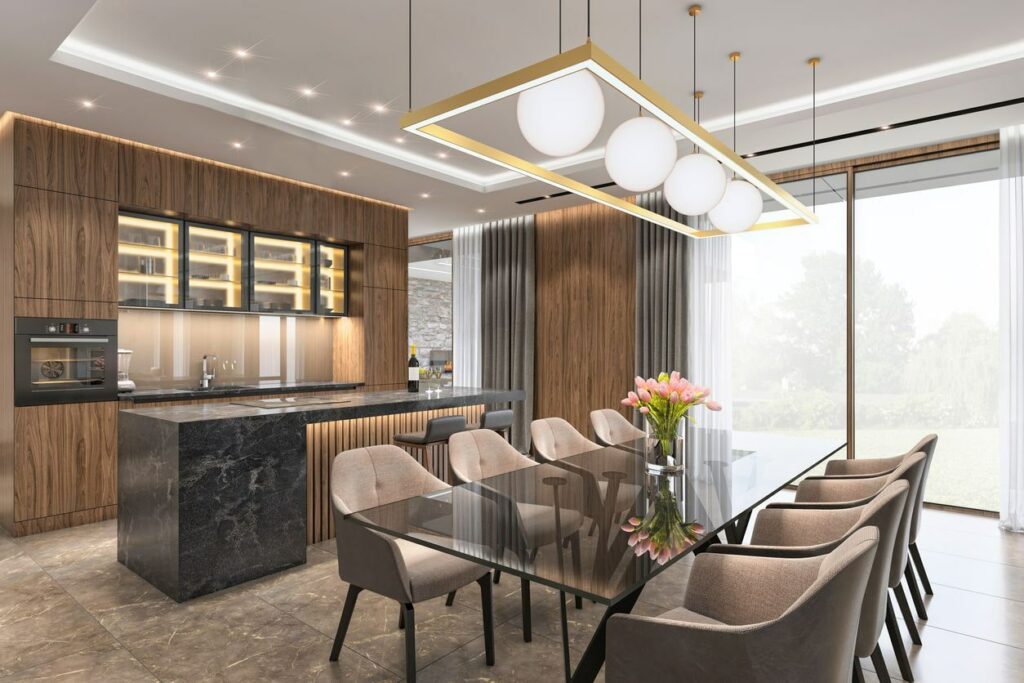
As a self-identified hater of the ‘big light’, this trend transcends seasons for me. However, layered lighting is more important than ever when losing long summer days and instead relying on indoor lighting.
Overhead lighting often makes a space feel clinical and harsh, which contradicts the attempt at autumnal cosiness. Layered lighting creates depth and dimension by combining different sources and levels of light. To encourage warmth in the space, we advise 2700K maximum for the lightbulbs. Getting the positions right matters as much as the fittings themselves, which is what a proper lighting design plan sets out.
More than just visual relief, lighting also affects mood, with warm lighting encouraging relaxation and comfort contrasting the grey English skies.
Curved furniture and why rounded shapes feel calmer

Curved silhouettes within interiors became prominent during the Art Deco Movement of the 1920s, establishing itself in interior design ever since. Curved furniture goes further than aesthetics. Our biophilic instincts suggest that we respond positively to the reduced stress organic, rounded shapes as opposed to sharp angular lines. It is the same thinking behind biophilic home design, where natural forms and materials are used to make a space feel calmer.

image: House Designer
Alongside this, curved furniture has functional benefits for a space. For example, a curved sofa subtly angles people towards one another, encouraging conversation and creating an intuitive and welcoming environment.
Instead of overcrowding a room with curved furniture, we recommend choosing one standout piece per room. Visual contrast is your friend when designing, try pairing a curved coffee table with a geometrical rug. It’s all about creating balance and creating a cohesive and intriguing space.
Adding texture to a room without clutter

image: House Designer
We have looked at shapes, colours and lighting, but there is one crucial component to creating interest and dimension in a space: texture.
Tactile layering is all about combining different surfaces and materials to generate a vocabulary of textures within a space. The result? An instantly elevated space adding warmth and dimension without feeling cluttered. Layered materials and fabrics can also be used to break up colour blocks within a space.
Cushions, throws and rugs are an easy entryway to adding texture to a space. However, this season textures are being used in elevated spaces: think textured wallpaper, exposed materials and fabric wall hangings. If you are considering pattern as well as texture, our bedroom wallpaper ideas cover how to use it without overwhelming a room.
House plants for autumn: because grey is boring

Bringing the outdoors in, houseplants are a simple way to break up deep autumn palettes through adding colour and texture. Rich greenery beautifully complements chocolate and cinnamon browns, collectively creating a balanced and natural feel to a space. Colour psychology tells us green symbolises growth, abundance and life. During a season in which the greens are changing to oranges and browns, house plants are a great way to bring a little life back into your space.
Interior Designers recommend plants with naturally curved leaves, like the Monstera deliciosa. These mimic the rounded silhouettes of curved furniture, creating cohesion within the room’s shape.
Planning an autumn refresh?

Pulling browns, lighting, texture and shape together is easier with a plan behind it. Our online interior design packages start at £499 per room and include a scheme, a layout and a shopping list you can order from, so you are not guessing at what goes where. If your outdoor space needs the same attention, garden design is the other half of the picture.
Not sure which direction suits your home? Our free interior design style quiz is a quick way to find out, or book a free consultation and talk it through with one of our designers.
About the author

Asia-Jade Pollard
Contributing Writer
Asia-Jade Pollard is a contributing writer for House Designer, covering seasonal interior trends and home decor. She writes on colour, furniture and styling, with a focus on practical advice for people decorating their own homes.