


The right rug can anchor a room, add warmth underfoot, and pull a scheme together in a way few other single pieces manage. The wrong one, or more often the wrong size, can leave a space feeling disconnected and unfinished. Getting a rug right comes down to a handful of decisions: the size for the room it is going in, the material, the colour and pattern, and how it is placed. This guide covers all of them, room by room, so you can choose a rug that suits the space and lasts.
As a general rule, a rug should be large enough to sit under at least the front legs of your furniture, extend around 18 to 24 inches beyond the sides of a bed, and reach roughly 24 inches past the edges of a dining table so chairs stay on it when pulled out. The right size depends on the room, and each is covered in detail below.
Why the Right Rug Size Matters

Size is the decision people get wrong most often, and it is the one that matters most. A rug that is too small makes a room feel disjointed, with furniture appearing to float around a stranded island of pattern in the centre. A well-sized rug does the opposite. It draws the furniture together, defines the space, and gives the whole arrangement a sense of intention. Before looking at colour or material, it is worth getting the size right for each specific room, because no amount of beautiful pattern rescues a rug that is the wrong scale.
Living Room Rug Size

In the living room, the rug sits at the centre of the scheme and does a lot of the work in making the space feel welcoming. There are three approaches that reliably work, depending on the size of the room.
All furniture on the rug – in a larger living room, a rug big enough to sit under every piece, sofas, chairs and coffee table, grounds the whole arrangement and creates a generous, pulled-together look. This is the most luxurious option and needs the space to carry it.
Front legs only – the most versatile approach for a mid-sized room. Place just the front legs of each sofa and chair on the rug, leaving the back legs on the floor. This connects the furniture to the rug and defines the seating area without needing the largest, most expensive size.
A floating rug for smaller rooms – in a compact living room, a smaller rug centred under the coffee table works well. It adds texture and colour without crowding the space, as long as it does not look marooned. In a small room, keeping the rug in proportion to the coffee table rather than the whole room is the trick.
Bedroom Rug Size

Bedrooms benefit from the warmth and softness a rug brings, particularly first thing in the morning. As a rule, the rug should extend at least 18 to 24 inches beyond the sides and foot of the bed so you step onto it rather than the cold floor. There are three placements worth knowing.
Under the entire bed – a rug large enough to sit under the bed and the bedside tables gives the most complete, balanced look. It suits a spacious bedroom and frames the bed as the centre of the room.
Three-quarter placement – a more economical option. Choose a rug that extends three-quarters of the way under the bed, starting just below the pillows before the headboard. It frames the bed and gives you the soft landing where you need it, without paying for a larger size.
Side rugs for smaller rooms – in a tighter bedroom, two smaller rugs or runners on either side of the bed are practical and cosy, giving you a soft step on each side without committing to one large piece.
Dining Room Rug Size

The dining room has one firm rule that catches people out. The rug needs to extend around 24 inches beyond every edge of the table, so that when chairs are pulled out to sit down, their back legs stay on the rug rather than catching on the edge. A rug that stops short of this makes every meal slightly awkward.

Round and square tables – match the rug shape to the table shape. A round rug under a round table and a square rug under a square table create a natural symmetry that feels right.
Rectangular tables – a rectangular rug that extends generously past the table edges is the safe choice, giving the chairs room to move while keeping the whole arrangement neat.
Hallway and Entryway Rug Size

Hallways and entryways set the tone for the whole home, and a rug makes the arrival feel warm rather than utilitarian. In a hall, a runner is usually the right choice, leaving a few inches of floor visible on each side for a balanced look rather than wall-to-wall coverage. In a square entrance, a smaller rug that fills the centre gives guests a soft landing while keeping the borders clear.
Home Office Rug Size

In a home office or study, the right size depends on whether you want the rug under the desk and chair or as a feature in its own right. In a smaller room, choose a rug large enough that the desk chair stays on it as you move, so the castors do not catch on the edge. In a larger office, a rug that sits under the desk, chair and any additional seating pulls the whole room together and gives it a polished, finished feel.
How to Choose the Right Rug Material

Size determines whether a rug fits the room. Material determines how it feels, how long it lasts, and how much looking after it needs. The right choice depends heavily on where the rug is going and how much traffic it will take.
Wool is the classic all-rounder. It is durable, naturally stain-resistant, soft underfoot and holds its appearance well over years of use, which makes it a strong choice for living rooms and bedrooms alike.
Cotton is softer, lighter and easy to clean, well suited to lower-traffic rooms and to anyone who wants something washable. For a touch of luxury, silk and viscose bring a beautiful sheen and softness, though they mark easily and need more careful maintenance, so they suit bedrooms and formal spaces rather than busy family rooms.
For outdoor areas or very high-traffic spots, synthetic fibres such as polypropylene stand up to the elements and to heavy use while staying easy to clean.
The general principle is to match the material to the demands of the room. A hard-wearing wool or synthetic in a busy living room, something softer and more delicate reserved for spaces that see gentler use.
Choosing Colour and Pattern

A rug is one of the easiest ways to introduce colour and pattern into a room, and the right choice depends on what the rest of the space is already doing. If your room is largely neutral, a bold or patterned rug adds the focal point the scheme needs and brings the whole room to life. If your décor is already colourful and busy, the opposite applies: a plainer, solid-toned rug grounds the space and stops it feeling chaotic.
Whichever direction you go, the rug should relate to what is already in the room. Picking up a colour from the sofa, the curtains or the artwork ties everything together and makes the rug feel like part of a deliberate scheme rather than an afterthought. If you would like help pulling a room’s colours and materials into a coherent whole, our online interior design service covers exactly this kind of decision.
Layering Rugs for Texture and Warmth

Layering rugs adds depth and warmth, and it solves a couple of practical problems at once. A large, neutral, flat-weave or natural-fibre rug as the base, with a smaller, more decorative rug layered on top, creates a richer, more textured look than a single rug alone. It is also a clever way to make an awkward or oversized space feel deliberate, and to bring a smaller favourite rug into a room that would otherwise need a much larger one. Mixing textures, a soft wool over a flat jute base, for example, is where layering looks its best.
Maintenance and Cleaning
How much upkeep a rug needs should factor into the decision before you buy, not after. Low-pile rugs are far easier to vacuum and keep clean, which makes them the sensible choice for high-traffic rooms and homes with children or pets. High-pile and shaggy rugs feel wonderful underfoot but trap more dust and need more frequent, more careful cleaning. If a rug is going somewhere spills are likely, a stain-resistant material or a busier pattern that disguises the occasional mark will save a great deal of worry.
How Much Should You Spend on a Rug?

Rugs span an enormous range of prices, so it helps to set a budget before you start looking. As a broad guide to what rugs cost in the UK:
- Budget rugs – small to medium rugs in synthetic or low-cost fibres typically range from around £50 to £250.
- Mid-range rugs – wool, blends and more intricate designs generally fall between £400 and £800.
- High-end rugs – larger pieces in silk or hand-knotted wool, and designer patterns, start around £1,000 and can run well beyond that.
- Specialty and antique rugs – handmade, antique or rare pieces vary enormously, from a few hundred pounds to several thousand depending on age, condition and rarity.
A good rug is worth treating as an investment, because a quality piece in the right material will outlast several cheaper replacements. That said, there are plenty of well-made, affordable options, and the right balance is between what you spend and how long you expect the rug to last in the room you are putting it in.
Practical Tips Before You Buy

Measure first – before buying anything, measure the space and mark out the rug’s footprint on the floor with painter’s tape. Seeing the actual size in the room prevents the single most common mistake, which is buying a rug that turns out to be too small.
Think about flow – consider how people move through the room. In high-traffic routes a smaller or more hard-wearing rug makes sense, while a larger rug works to anchor furniture in an open space.
Try layering for awkward spaces – if a room is an unusual shape or size, a neutral base rug with a smaller patterned rug on top is a reliable way to make it work.
Bringing It All Together
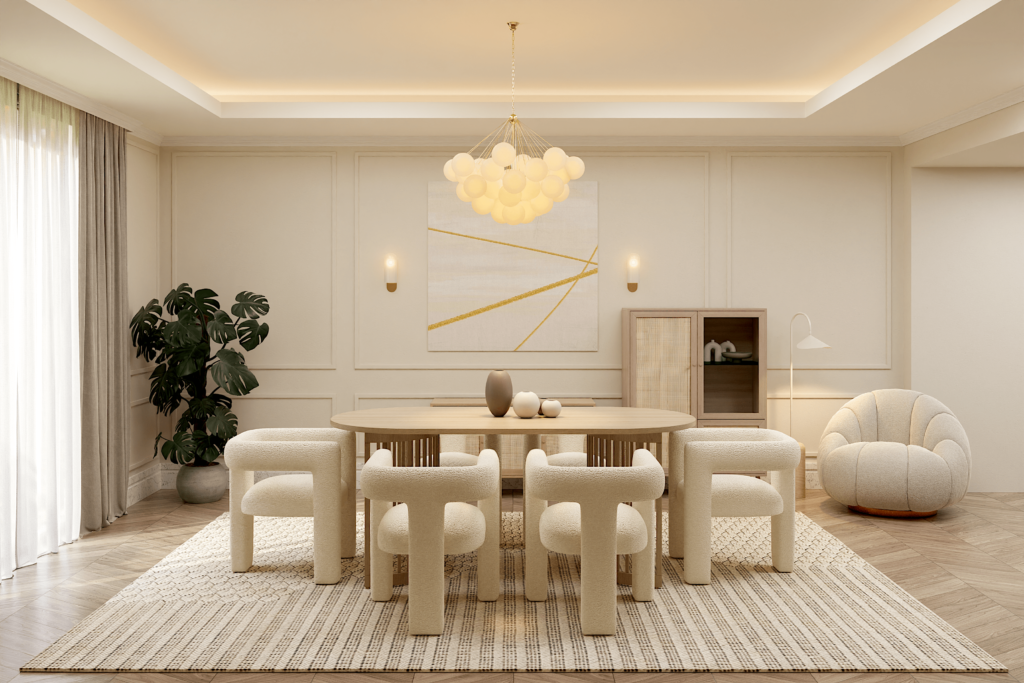
Choosing a rug well is a matter of getting a few decisions right in order: the size for the room first, then the material for the traffic it will take, then the colour and pattern to suit the scheme, and finally the practical questions of care and budget. Get those in the right order and the rug will do exactly what a good rug should, making the room feel warmer, more complete and more comfortable to be in.
Rug size and placement are one part of a larger picture. If you would like a room planned properly, with layout, furniture placement and materials all working together, our online interior design services take care of the whole scheme, and you can book a free consultation to talk through your space.