

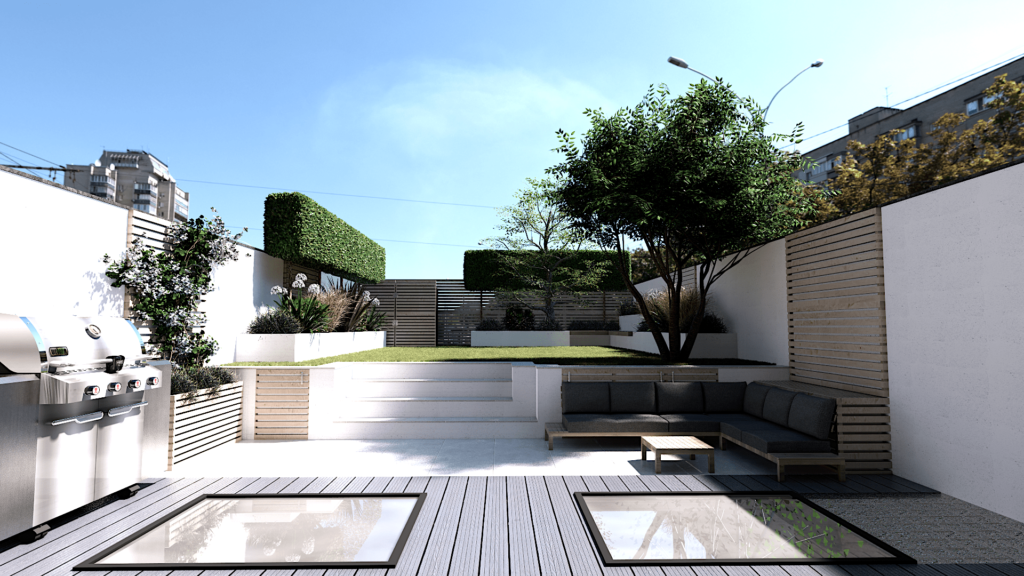
Looking to give your outdoor space a makeover without a massive budget? It’s easier than you think to revamp your balcony, backyard, or front garden without breaking the bank. With a little creativity, cool ideas, and careful planning, you can transform your outdoor space into a cosy and stylish haven under a decent budget.
Our Professional Garden Designers have rounded up affordable garden design ideas that will help you save costs whilst making your outdoor space look beautiful and inviting. Try these ideas to transform your garden!
Bring Your Indoors Outdoors
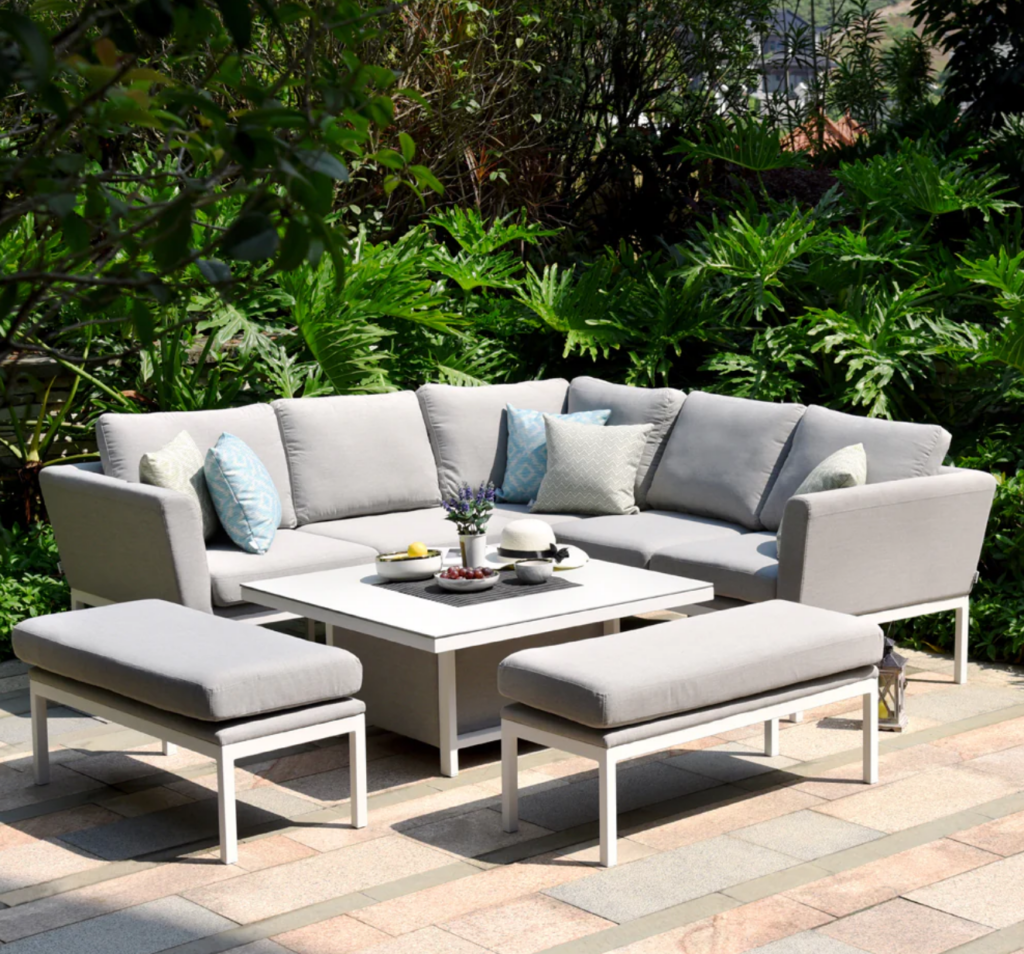
Maze Garden Furniture Set from Olivia’s
A simple and effective way to give your patio or garden a fresh look is to bring your indoor furniture outside. Consider introducing rugs, dining furniture, and even a portable armchair. Don’t forget to add plenty of cushions and throws for those cooler evenings. The possibilities are limitless.
Opt for lightweight and easy-to-move pieces; after all, you wouldn’t want to struggle with heavy furniture when it’s time to bring it back indoors. Choose items that can be easily gathered up as the sun sets.
Create An Outdoor Kitchen
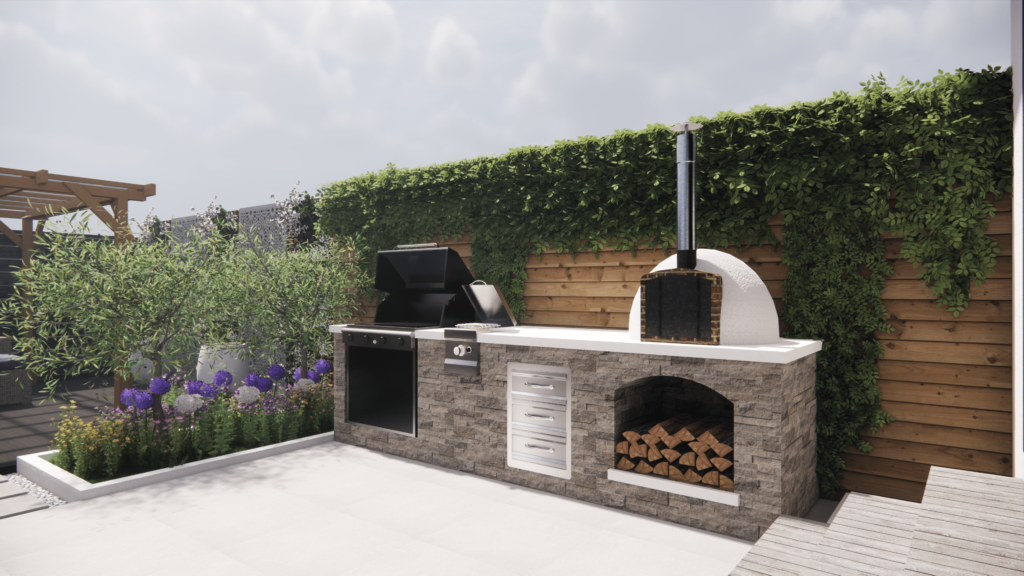
image credit: House Designer
Create an outdoor cooking space by incorporating a sleek work surface alongside your patio. You don’t need to break the bank; a few wooden planks coated with exterior paint will serve the purpose effectively.
Plant Trees To Add Some Height To Your Garden
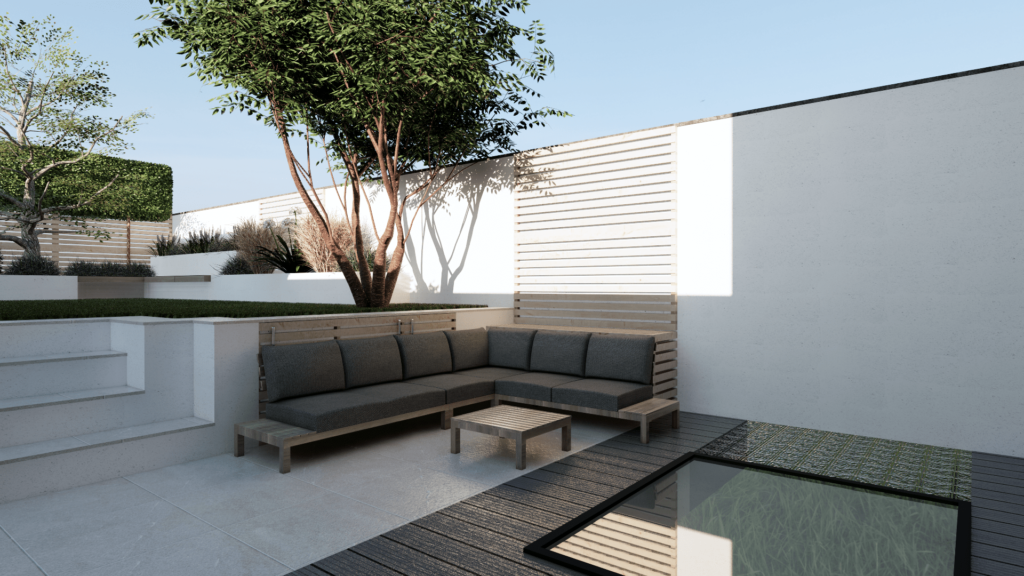
image credit: House Designer
Before you dismiss this idea because of the potential high cost of pre-grown trees, it is essential to know that this concept is a slow burner.

Consider buying a small ornamental tree, such as an acer, palm, olive, or apple – budget-friendly options can often be found in many stores. You can either plant it directly in the ground or place it in a planter. Opting for the latter is a better option, especially if you rent your home, as it allows you to take your tree with you when you eventually relocate.
With some care and attention, this petite tree will, over the years, flourish into a delightful addition to your garden, injecting vibrant colour and captivating appeal into a previously lacklustre corner.
Create a DIY Path
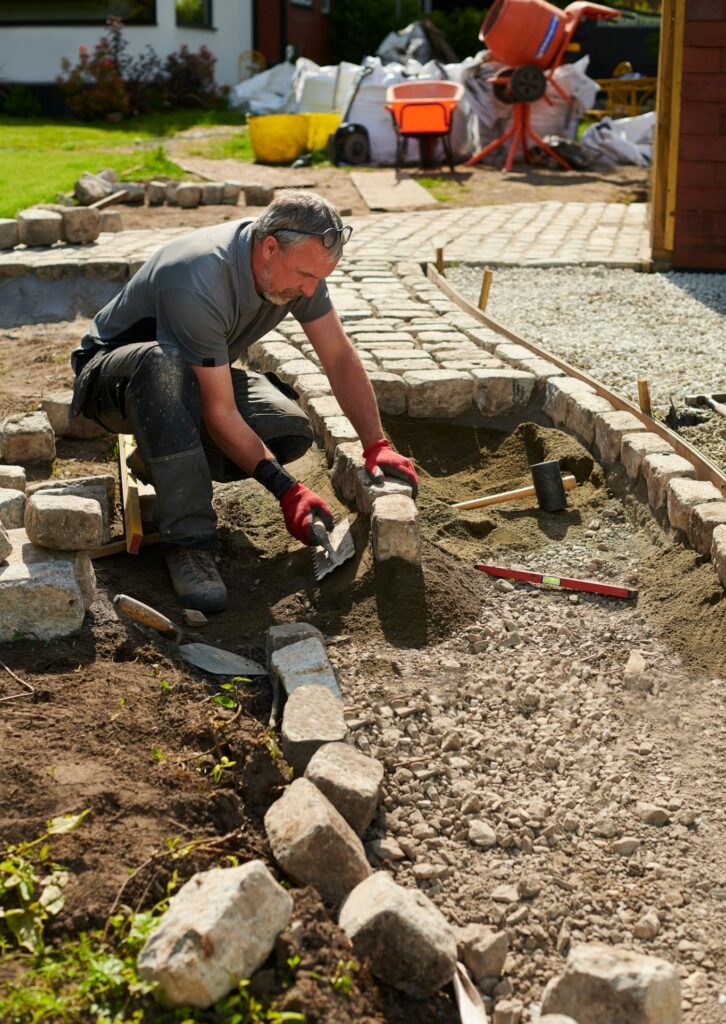
Creating a garden path does not have to be a costly endeavour. Whether you opt for bark nuggets, slate chippings, gravel, or pea shingle, there are numerous user-friendly options that not only look great but are also practical to walk on.
You could choose to lay your path directly on the ground or on a solid surface (such as a concrete hardstanding or an unattractive paved area) and then evenly spread loose materials like gravel or shingle over it. However, in most instances, it’s a wise idea to first place a landscape membrane and then apply the aggregate on top.
This approach serves a dual purpose by preventing the aggregate from sinking into the soil and thwarting the growth of weeds within the path.
DIY Water Feature
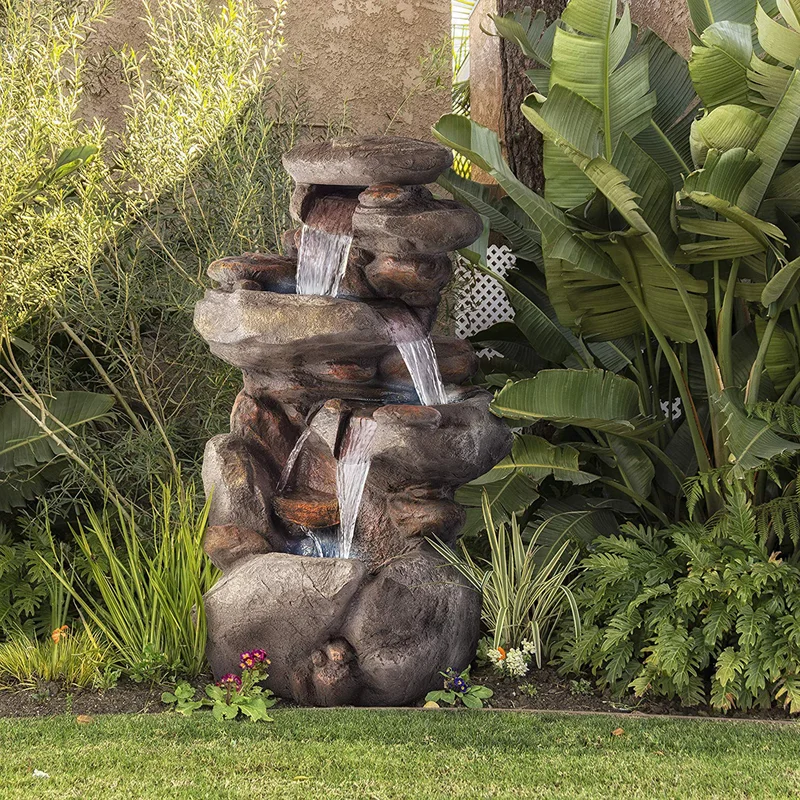
Water fountain by Fernleaf
The tranquil sound of gently flowing water or the sun’s radiant dance on the water’s surface can introduce a whole new dimension to your outdoor space. Crafting a DIY water feature is easy. While there are several ready-made designs available for purchase, a DIY water feature is remarkably simple to assemble and can be equally impactful.
Start by selecting a shallow yet wide open container, such as a vintage enamel basin, a galvanised metal tub, or even an upturned dustbin lid. These choices will work perfectly. Place the container on level ground, or if preferred, elevate it slightly on a basic brick or timber plinth. Ensure that it’s situated away from trees or shrubs.
Next, decide on the specific elements you want your water feature to incorporate – whether it’s tranquil still water, a small solar-powered bubbling fountain, or an array of aquatic plants. After making your choice, fill the container with water, sit back, and relish the captivating reflections of passing clouds overhead, as well as the delightful visits from thirsty birds and other enchanting wildlife.
Go For A Simple Planting Scheme
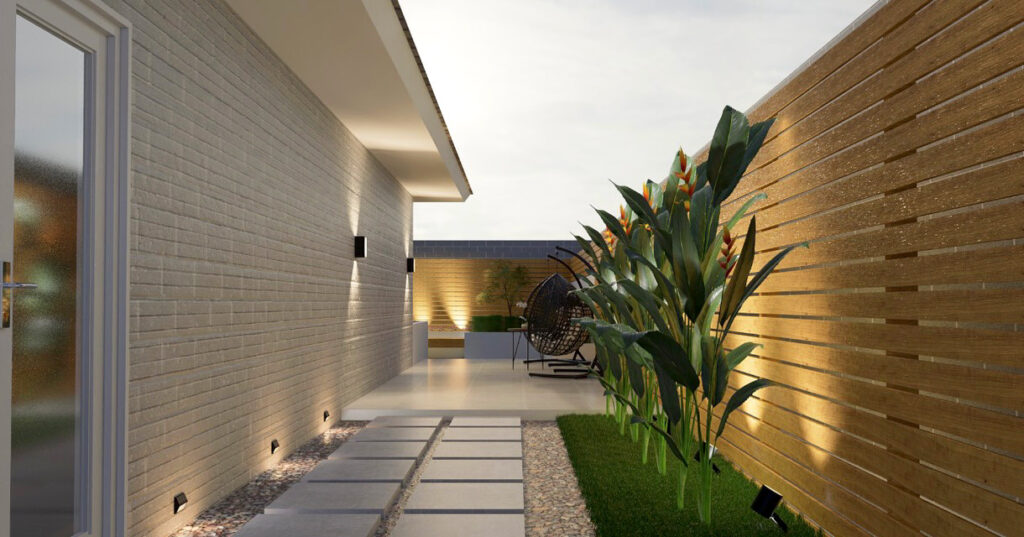
image credit: House Designer
A simple way to make a style statement in your outdoor space is to harmonise your planting plan i.e. keeping to complementary colour palettes rather than a random mix.
Opting for a single colour theme across your flower beds and borders, such as an all-white floral display, not only creates a striking effect but can often be just as captivating as a diverse array of colours.
Another strategy for achieving a coordinated planting plan is to replicate the same plant species in different areas within your beds and borders. Whenever possible, arrange plants in small groupings or clusters.
In terms of group size, it’s worth noting that odd numbers tend to appear more natural and aesthetically pleasing than even numbers. Therefore, organise your plant groupings in sets of three, five, and so on.
Create A Focal Point
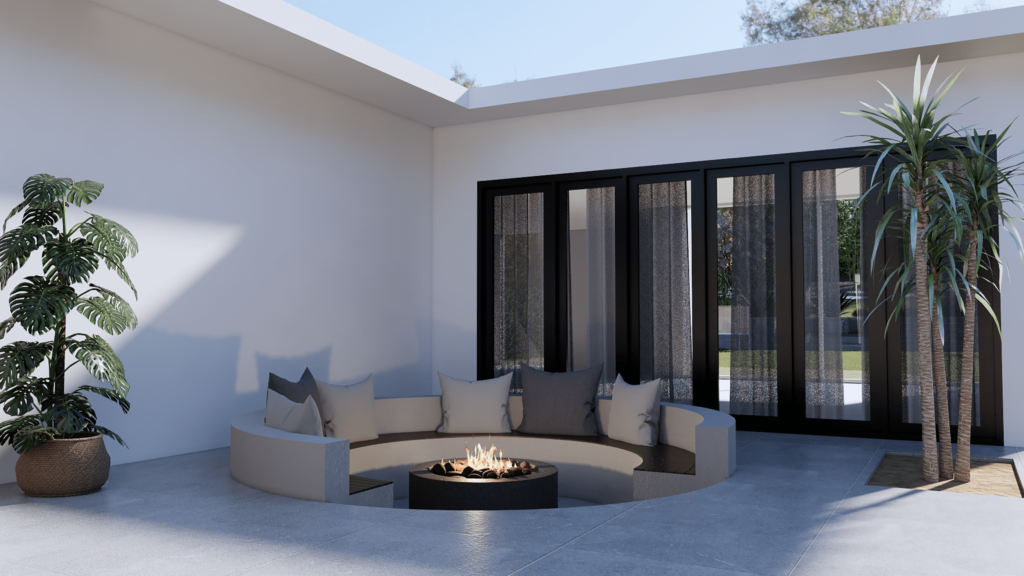
image credit: House Designer
Whether your outdoor space is small or sprawling, introducing a focal point to your garden is a good way to establish a visually captivating centrepiece. Whether it’s a bench positioned amid your garden or a modest tree strategically placed halfway down, the inclusion of a focal point serves to guide the eye and piques curiosity, encouraging further exploration.
You can spark interest with a pathway, a partially secluded seating area, or astute planting that highlights a particular spot or lovely view. However, don’t be tempted to use too many focal points. It can lead to confusion, hence it is advisable to limit your garden to just one or two carefully selected focal elements.
Reuse Old Corks For Planting
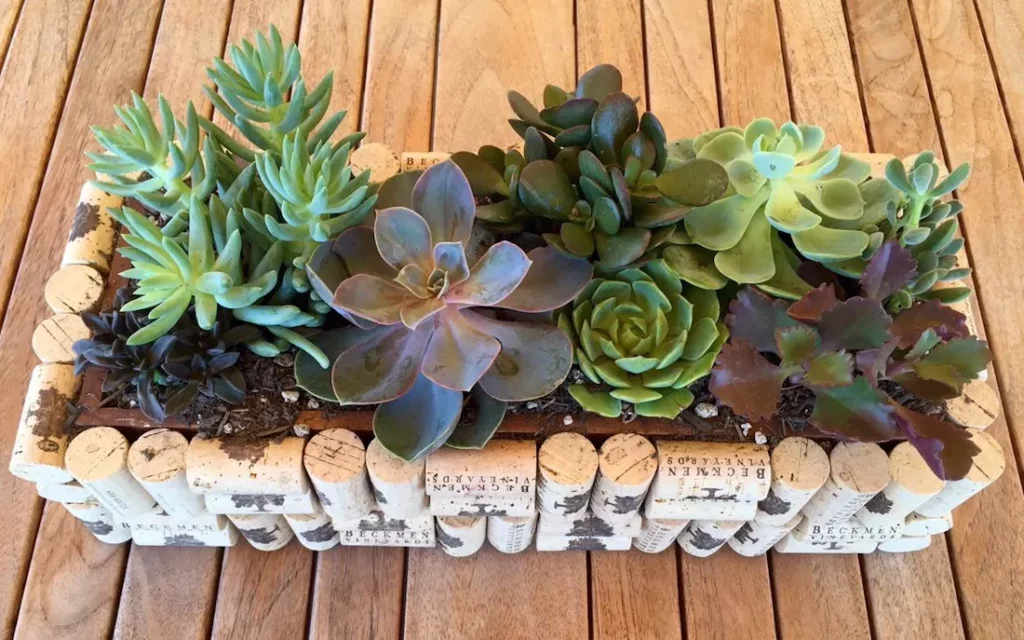
image credit: Beckmen Vineyards
Preserve the corks from wine bottles and repurpose them into vegetable labels. Start by removing one-fifth of the cork to expose a flat surface. Then, inscribe the name of each vegetable with a permanent marker
To give your labels some height, insert a wooden skewer into the cork’s base. When you’re tending to your vegetable garden, simply place these labels into the soil to serve as handy reminders of your plant varieties.
Affordable Garden Design
With these affordable garden design ideas, you can create a stunning outdoor space on a decent budget. Whether you’re transforming a small urban balcony or a spacious backyard, these budget-friendly tips will help you achieve a beautiful and relaxing garden that you can enjoy year-round.