
Outdoor garden lighting design with decorative globe lights creating ambience.

The Ultimate Guide to Outdoor Lighting for your Garden

Good outdoor garden lighting changes how your garden feels and how much time you actually spend in it. A garden that goes dark at 8pm is a garden you stop using in the evening. One with the right lighting becomes somewhere you want to be until well after sunset, whether that is dinner with friends, a quiet drink, or just sitting outside because the atmosphere is too good to leave.

Before you start buying fittings, it helps to think about what you are trying to achieve. Do you need practical lighting to make paths and steps safe? Are you after a warm ambient glow for a seating area? Do you want to highlight a feature tree or a piece of garden sculpture? Most gardens benefit from a mix of all three, and getting the balance right is what separates a well-lit garden from one that feels like a car park or a nightclub.

Start With Safety

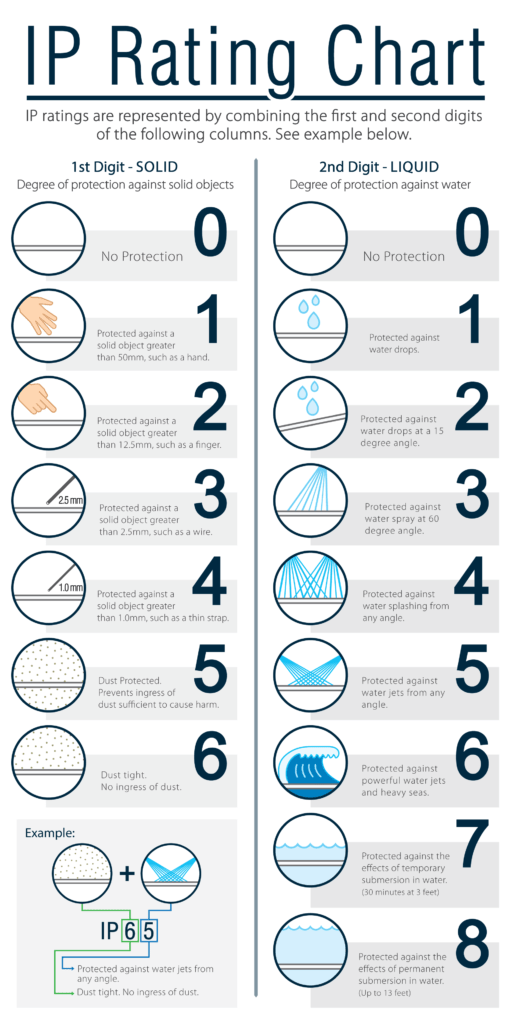
IP rating chart for outdoor garden lighting showing protection levels against water and dust

Safety comes first with any outdoor electrical installation. Every fitting used outside must be watertight and rated to withstand rain, frost and temperature changes throughout the year.

Check the IP rating before buying anything. The IP rating measures a product’s resistance to dust and water. The first digit indicates protection from solid objects, the second from liquids. For fittings exposed to rain and the elements, look for IP44 or higher. Anything recessed into the ground or submerged in water needs IP67 or IP68.

If you are installing mains-voltage lighting outdoors, it must be done by a qualified electrician. This is not a DIY job. Low-voltage systems (12V or 24V) and solar lights are safer to install yourself, but they still need to be rated for outdoor use. Cutting corners on outdoor electrical work is one of the few areas in garden design where the consequences can be genuinely dangerous.

Plan Your Lighting by Zone

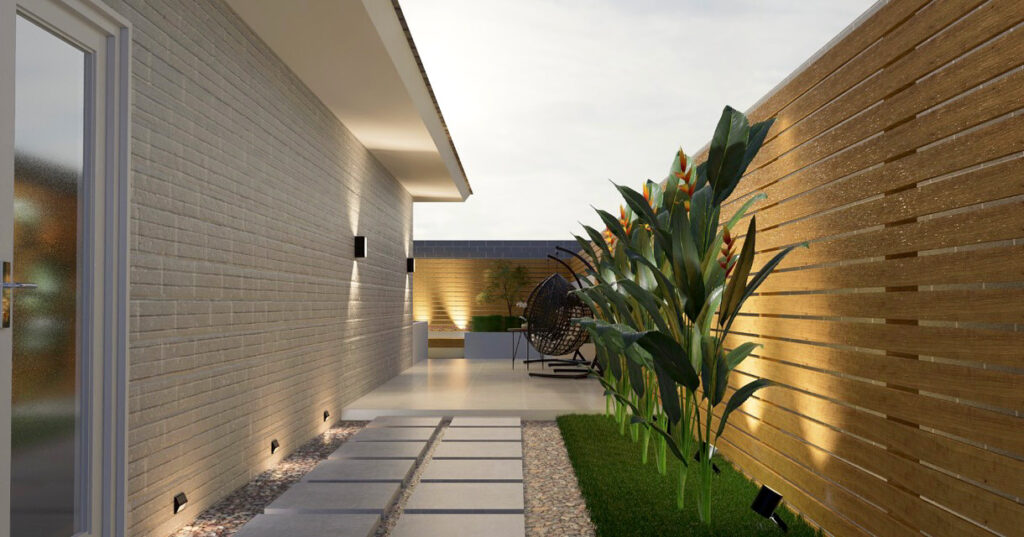
Outdoor garden lighting design showing zoned approach with pathway lights, uplighting and festoon lights

Photo credit: House Designer

The most common mistake with garden lighting is treating the whole space as one area and flooding it with light. Less is almost always more. The gardens that look best at night are the ones where light and shadow work together, with some areas illuminated and others left deliberately dark.

Break your garden into zones and think about each one separately.

  • Entrance and porch. This is about welcome and safety. A warm downlight above the front door, or a pair of wall-mounted lanterns either side of it, makes the entrance feel inviting. Motion-sensor fittings work well here so the light is there when you need it without running all night.
  • Pathways and steps. Low-level path lights or recessed step lights guide you safely through the garden without throwing light upward. These should be subtle, just enough to see where you are going without illuminating the whole garden. Spacing them evenly at roughly 2-metre intervals creates a rhythm that draws you along the path.
  • Patio and dining area. This is where you want warmth and atmosphere. Overhead festoon lights strung between posts or a pergola give the most flattering, sociable light for dining. Wall-mounted downlights on a low setting work well for a more permanent solution. Avoid bright downlights directly above a table because they create harsh shadows on faces.
  • Planting and feature areas. Uplighting a tree, a textured wall or a sculptural plant from below creates drama and depth. A single well-placed spike light at the base of a tree transforms the entire garden at night. This is the type of lighting that makes people say the garden looks magical.
  • Boundaries and fencing. Soft wash lights along a fence or wall extend the perceived size of the garden by pushing light to the edges. Without boundary lighting, the garden feels like it shrinks after dark because the edges disappear into blackness.

Choosing one lighting type per zone keeps the design clean and prevents the garden from looking cluttered. You want pools of light and pockets of shadow, not uniform brightness everywhere.

LED vs Halogen vs Solar

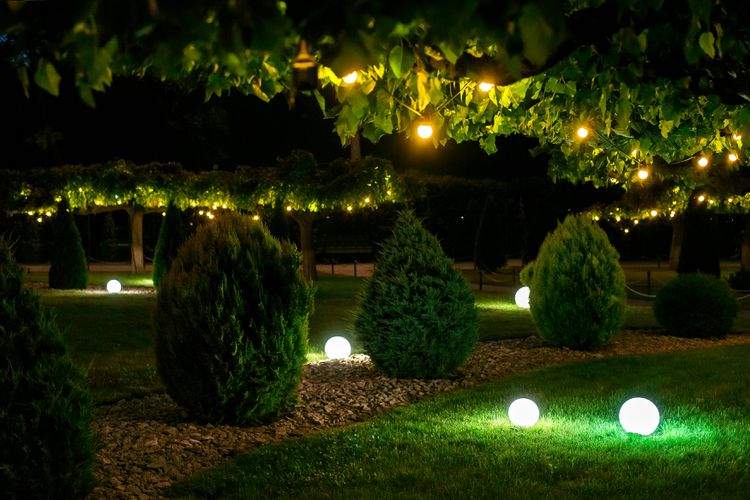
Globe-shaped outdoor garden lighting on a lawn creating soft ambient light

Photo credit: Bespalyi / Getty Images

LED is the clear winner for garden lighting in almost every situation. LED bulbs last roughly ten times longer than halogen, use a fraction of the electricity, and are now available in warm colour temperatures (2700K to 3000K) that feel just as inviting as traditional bulbs. The slightly higher upfront cost is recovered within the first year through lower energy bills.

Solar lights have improved enormously and are a good option for path markers, decorative accents and areas where running cable is impractical. The limitation is that they depend on sun exposure during the day to charge, so they perform poorly in shaded gardens or during the shorter days of winter. They also tend to give a weaker, less consistent light than wired fittings.

For your primary garden lighting (patio, entrance, feature lighting), wired LED is the most reliable choice. For secondary and decorative lighting (path edges, borders, seasonal additions), solar works well enough and avoids any electrical installation.

Ambient, Task and Accent Lighting

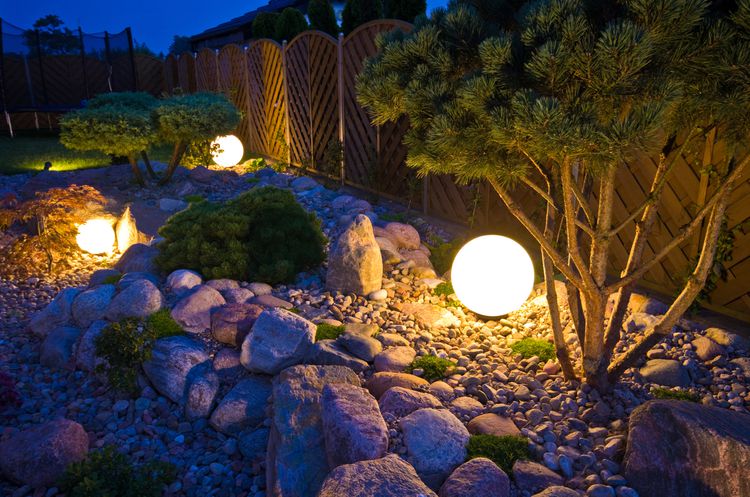
Decorative globe outdoor garden lights creating warm ambience in an evening garden setting

Photo credit: AHatmaker / Getty Images

Professional lighting designers think in three layers. Getting all three right is what makes a garden feel properly lit rather than simply illuminated.

  • Ambient lighting provides the overall general glow that replaces daylight after the sun goes down. Festoon lights, wall-mounted downlights on a dimmer, and soft overhead lighting from a pergola all fall into this category. The aim is gentle, even illumination that makes the space feel warm and usable without being bright.
  • Task lighting provides focused illumination where you need to see clearly. Pathways, steps, cooking areas and anywhere that could be a trip hazard all need task lighting. It should be functional and unobtrusive. Recessed step lights, low-level bollards and under-counter lights for an outdoor kitchen are all task lighting.
  • Accent lighting highlights specific features and creates visual interest. Uplighting a tree trunk, washing light across a textured stone wall, or illuminating a water feature from below are all accent techniques. This is the layer that gives your garden personality and drama after dark. A garden with only ambient light feels flat. Adding two or three accent lights transforms it.

Colour Temperature Matters

The colour of the light is just as important as where you put it. Colour temperature is measured in Kelvins (K). Lower numbers are warmer (more orange/yellow), higher numbers are cooler (more blue/white).

For gardens, stick to warm white in the range of 2700K to 3000K. This is the colour of candlelight and traditional bulbs, and it makes skin, planting and natural materials look their best. Anything above 4000K starts to feel clinical and cold, which is fine for a security light but wrong for a space designed for relaxation.

If you are mixing different fittings from different manufacturers, check that the colour temperatures match. A 2700K festoon light next to a 4000K path light will look odd because one glows warm and the other glows cold. Consistency across the whole garden is what makes the lighting scheme feel professional.

Common Mistakes to Avoid

  • Too much light. Over-lighting is the number one mistake. A garden is not a football pitch. You want pools of light and areas of darkness. The contrast between the two is what creates atmosphere.
  • Pointing lights at the house. Uplighting your home’s facade can look impressive, but if the light shines into bedroom windows it becomes a problem very quickly. Test the angle before fixing anything permanently.
  • Forgetting about neighbours. Light spill into neighbouring gardens is a common source of complaints. Position fittings carefully and use shielded or directional lights that contain the beam where you want it.
  • Ignoring the wiring. Cables need to be buried properly or routed through conduit, not left lying on the surface. Surface cables are a trip hazard, look untidy, and get damaged by garden tools. Plan cable routes before the hard landscaping goes in, because retrofitting them afterwards means digging up finished surfaces.
  • No dimming or control. A garden lighting scheme with no way to adjust the brightness feels rigid. A simple outdoor dimmer switch or a smart plug that lets you control lights from your phone gives you the flexibility to set the right mood for different occasions.

When to Plan Your Garden Lighting

The ideal time to plan lighting is at the same time as the rest of your garden design, before any hard landscaping begins. Running cables under a patio is straightforward when the patio is being laid. Running them after it is finished means lifting slabs or routing cables along the surface, which is messier and more expensive.

If you are starting a garden project from scratch, our designers include lighting placement as part of the overall garden scheme. If you already have a finished garden and want to add lighting, a standalone lighting plan gives you a clear layout showing exactly what fittings to use and where to position them, along with cable routing so your electrician knows what to do.

Light Up Your Garden

Free Garden Design Consultation with House Designer Team

Outdoor lighting is one of the most rewarding upgrades you can make to a garden. It extends the hours you can enjoy the space, makes it safer to move around after dark, and adds a layer of atmosphere that completely changes how the garden feels in the evening.

Our garden design packages include lighting as part of the full scheme, so your fittings are planned alongside the layout, planting and materials for a result that works as a whole. If you want to talk through your garden project, book a free consultation with our design team or take our style quiz to explore what direction suits your space.

About the author

Mirela Bajic, Senior Garden Designer at House Designer

Mirela Bajic

Senior Garden Designer

Mirela holds a degree in Garden Design and RHS Level 2 and 3 Diplomas in Horticulture, Garden Planning and Construction. With seven years of experience, she designs imaginative landscapes that beautifully blend natural elements, with a commitment to excellence that shines through in every project she takes on.

750 497 Mirela Bajic