
Creating an organised, clutter-free family home can feel like solving a puzzle where the pieces keep multiplying. School bags, toys, shoes, paperwork and the endless kit of daily life all need somewhere to live, and without a plan, every surface becomes the somewhere. The answer is rarely more storage, it is smarter storage, planned around how your family actually moves through the house.
Here are the storage ideas we use most in real family projects, room by room, from hidden joinery to five-minute hacks. Whether you are managing a compact London flat or a larger family home, these ideas will help you claim back space and keep it.
What Are the Best Storage Ideas for a Family Home?

Ridwell Interiors
The best family home storage ideas use the spaces you already have: built-in joinery in alcoves and under the stairs, bench seating and beds with storage inside, wall-mounted storage that keeps floors clear, and a labelled home for every category of clutter. Planning storage room by room, at the point where the clutter actually lands, is what keeps a busy home tidy.
Hallway and Entryway Storage
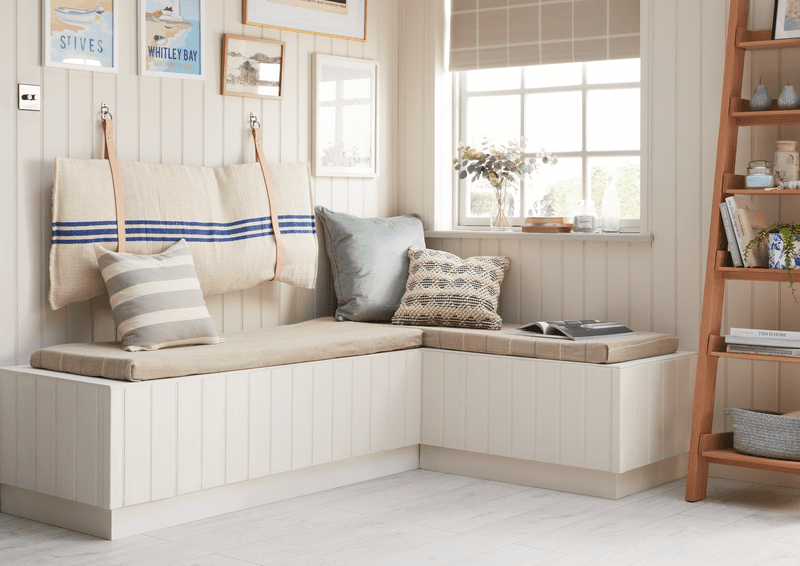
Bench Seating with Hidden Storage

image credit: Homebase
A storage bench by the front door catches the daily tide of shoes and bags before it spreads through the house. Lift-up seats or baskets underneath hold a pair or two of shoes per family member, and the seat itself gives children somewhere to sit while they put shoes on, which means shoes actually come off at the door. Aim for a bench around 45 centimetres deep so it seats comfortably without narrowing the hallway.
Mudroom Cubbies with Charging Stations
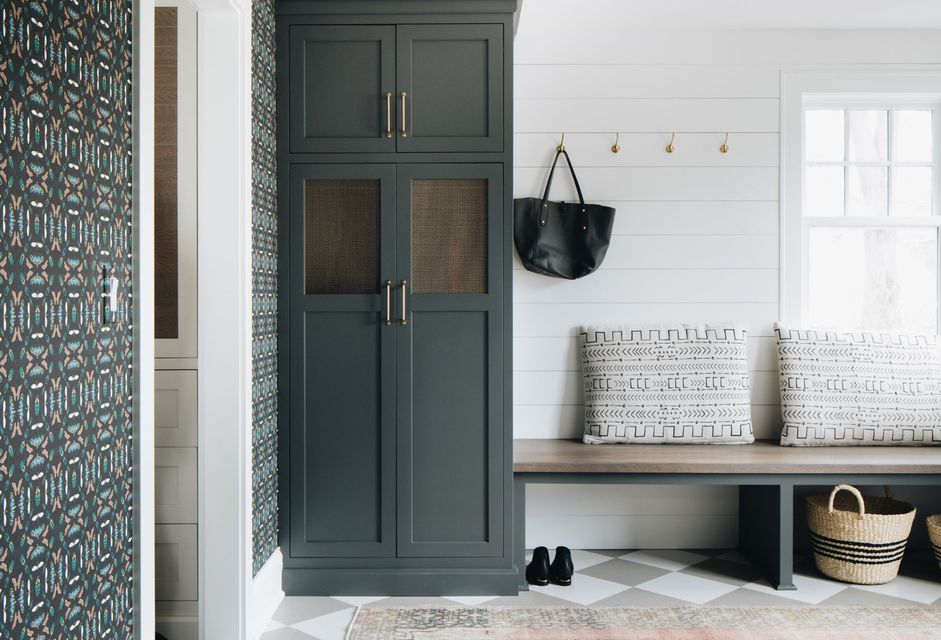
Give each family member a dedicated cubby with hooks at their height, a shelf, and a charging point. Devices charge by the door overnight, keys live in one place, and the morning scramble shortens noticeably. If you are planning built-in joinery for a hallway, a run of cubbies with a bench and tall cupboard either end works in even a narrow space.
Think Vertically in Narrow Hallways

Marika Meyer
In a narrow hallway, the walls are the storage. A slim shelf with hooks beneath it, mounted at around 170 centimetres, holds coats and caps without a bulky unit eating floor space. A picture ledge above the door line stores rarely used items in baskets, out of sight from eye level.
Kitchen and Pantry Storage
Vertical Cabinet Dividers

image credit: goodtopssm
Baking sheets, chopping boards and trays stack badly and stored flat they bury each other. Vertical dividers in one cabinet turn the pile into a filing system, every board slides out without moving another. It is a ten-minute fix with tension dividers, or a joiner can add fixed slots when cabinets are being fitted.
Labelled Storage in the Pantry

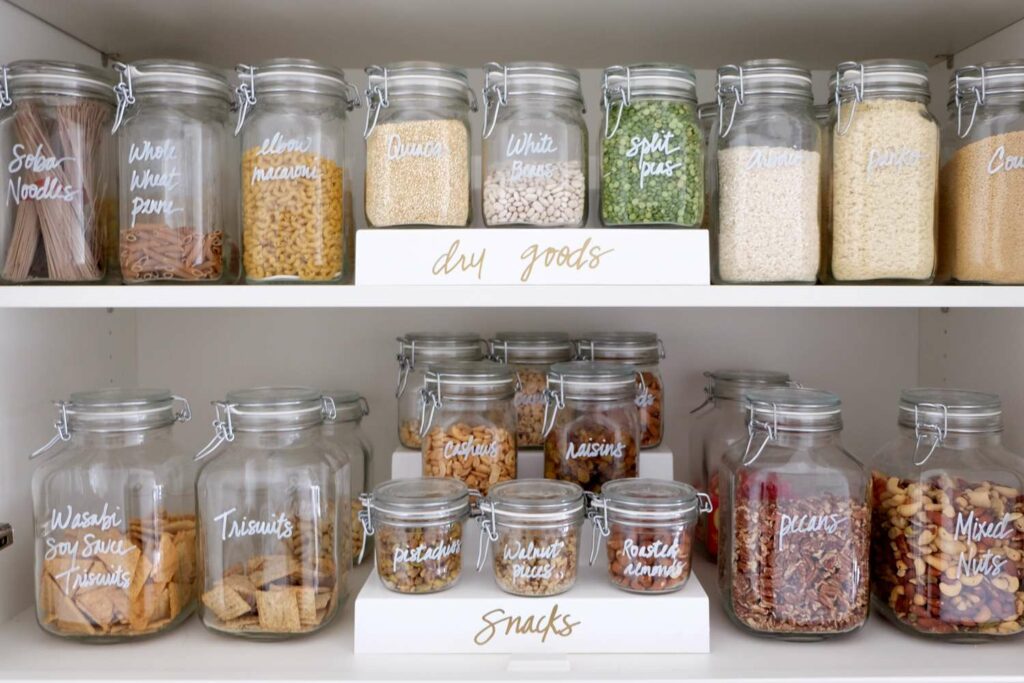
image credit: Martha Stewart
Decant dry goods into transparent, labelled containers. You see what you have at a glance, packets stop multiplying, and the weekly shop gets faster because gaps are visible. Square containers use around a quarter more shelf space than round ones, a small change that adds up across a pantry.
Magnetic Spice Jars and Door Racks
Free up a whole cabinet by moving spices into magnetic jars on the fridge or a slim rack inside a cupboard door. The inside of cupboard doors is some of the most under-used storage in any kitchen, slim racks there hold foils, wraps, lids and cleaning sprays without touching shelf space.
Use the Kickboard Drawer Trick

Tom Howley
The plinth beneath your base cabinets hides around 15 centimetres of dead height. Kickboard drawers fitted there swallow flat items, trays, place mats, even children’s art supplies, and they are a favourite of ours in compact kitchens where every centimetre has to earn its place.
Living Room Storage
Built-In Alcove Joinery

images sourced from Pinterest
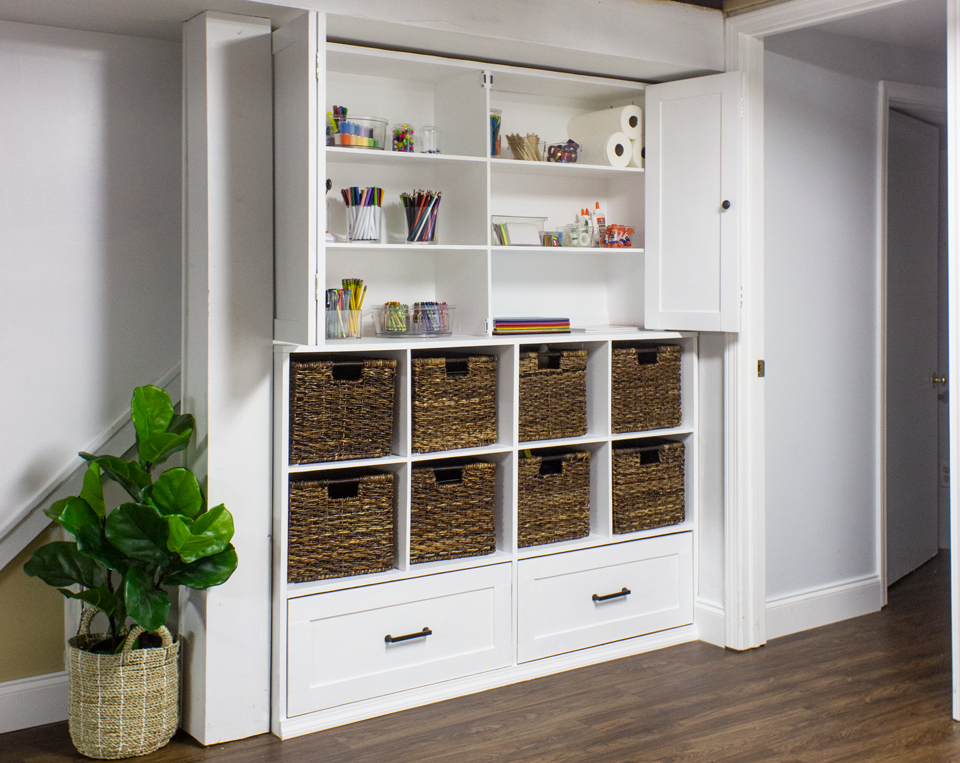
The alcoves either side of a chimney breast are the single best storage opportunity in most UK living rooms. Built-in cupboards below with shelves above hold toys, games, paperwork and media kit behind doors, while the shelving displays the things you want to see. Because the joinery sits within the alcove, it adds storage without taking floor space. We plan custom alcove joinery to the millimetre, so the design is ready to hand to any joiner.
DIY Bookshelf Bench
A low bookcase turned on its side, topped with a cushion, becomes a window seat with book and toy storage below. It is one of the most cost-effective storage upgrades there is, and children use the shelves themselves because everything sits at their height.
Storage Furniture That Works Twice
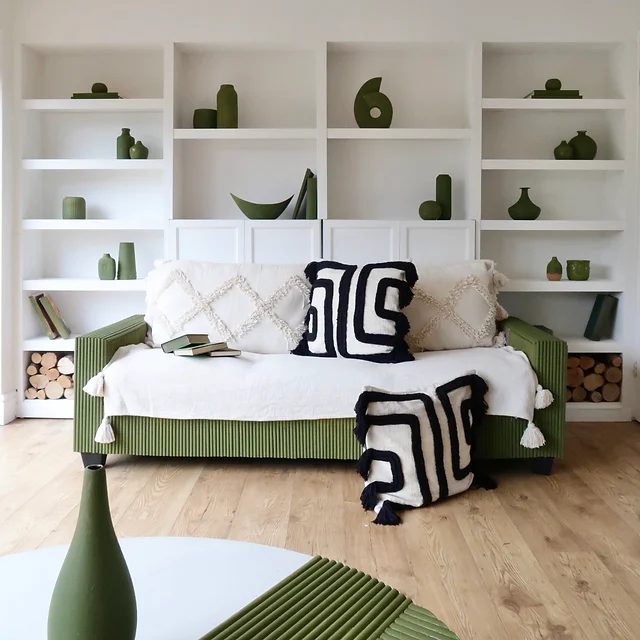
In a family living room, every large piece should store something. Ottomans with lift-up lids hold blankets and toys, coffee tables with drawers swallow remotes and chargers, and a console behind the sofa adds a surface plus baskets beneath. If you are choosing new pieces, a sofa with a storage base earns its place in a family room.
Under-Stair and Awkward Spaces

image credit: Sharps
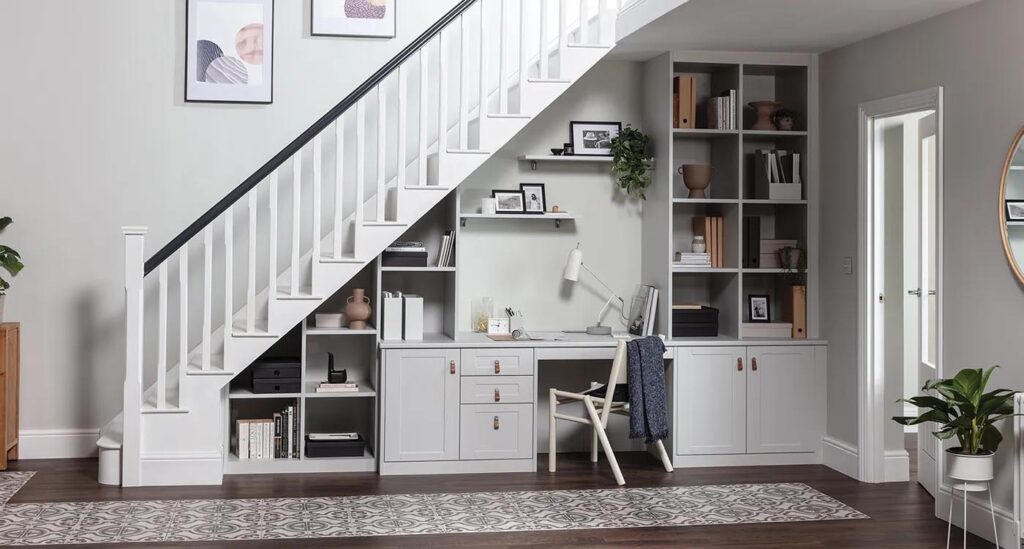
The space under the stairs is a room’s worth of storage hiding in plain sight. Pull-out drawers work better than a single door, because they bring the deep back of the space to you, no crawling in after the hoover.

create a bed
Depending on depth, the same footprint can become shoe drawers, a coat cupboard, a compact home office or a dog bed nook. Sloped and awkward corners elsewhere respond to the same thinking: fit the storage to the shape rather than forcing standard units in.
Bedroom Storage
Under-Bed Storage Done Properly
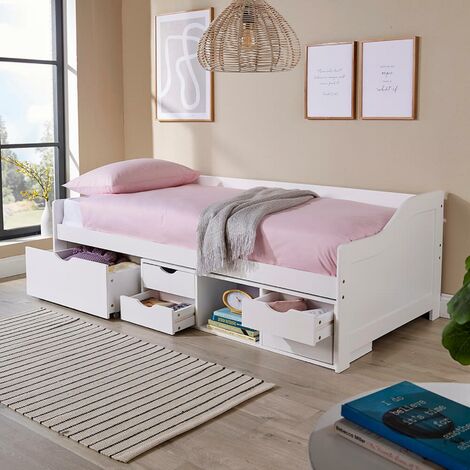
The area under a double bed holds roughly the same as a chest of drawers, if it is organised. Rolling bins or shallow lidded boxes keep seasonal clothing, spare bedding and bulky toys dust-free and reachable. Better still, an ottoman bed lifts to reveal the whole base as storage, which in a small bedroom can replace a piece of furniture entirely.
Murphy Beds: The Space-Saving Hero

image credit: Strachan
For a guest room, home office or playroom that has to be two rooms at once, a Murphy bed folds into the wall and hands the floor back. We designed one for a client in Central London whose spare room needed to work as an office all week and a guest room at weekends, a custom unit with shelving and integrated lighting that switches roles in under a minute. That dual-purpose room in Central London is a good example of practical design that still looks beautiful.
Hidden Laundry Baskets
Pull-out or tilt-out hampers built into a wardrobe or bathroom unit keep laundry off the floor and out of sight. Two compartments, lights and darks, means washing arrives at the machine pre-sorted, a small design decision that saves a chore every week.
Kids’ Rooms and Play Areas
Storage at Their Height

image credit: Shade of Blue interiors
Children tidy up when the storage is designed for them: open bins and baskets they can reach, one category per basket, and a picture or word label on each. Anything stored above their shoulder height becomes your job forever. A wall-mounted bookshelf keeps floors clear and turns book covers into decor, and a rotating toy system, half the toys stored away, swapped monthly, keeps the room calmer and the toys more interesting. Storage that grows with your children is the heart of good family-friendly interior design.
Rolling Cart for Craft Supplies
A three-tier rolling cart holds the entire craft operation, pens, paper, glue, glitter under supervision, and moves from kitchen table to bedroom and back. When it rolls into a cupboard at the end of the day, the mess goes with it.
The Family Command Centre
Give the household admin one home: a noticeboard, a shared calendar, a tray per person for paperwork, and hooks for keys. Site it where the family actually passes, usually the kitchen or hallway, not the study nobody enters. When the school letters, invitations and permission slips have a single landing place, they stop colonising the kitchen worktop.
The Habits That Keep It Working

color and crown
One in, one out – when a new toy, gadget or coat arrives, an old one leaves. This single rule does more than any storage unit to keep a family home under control.
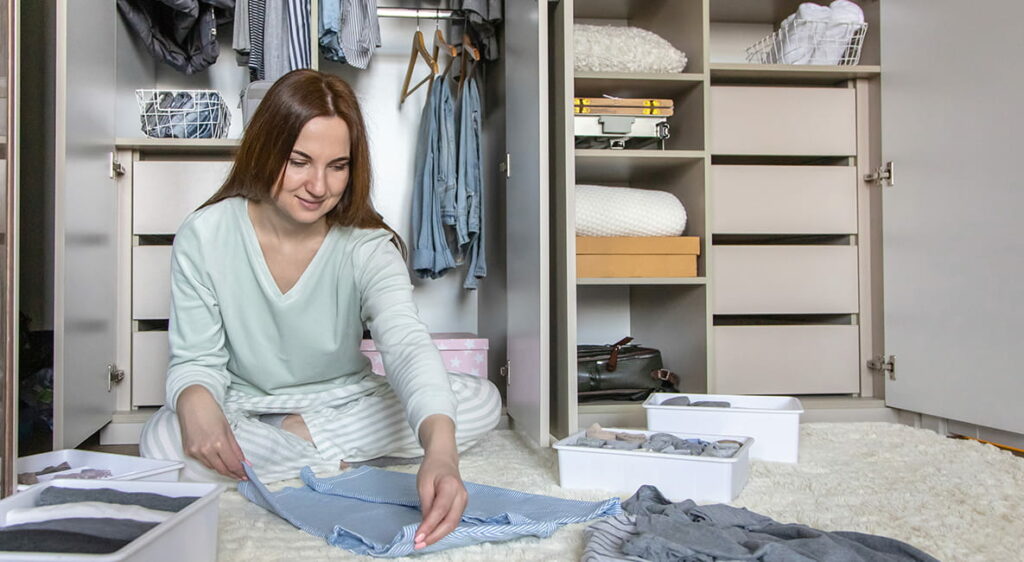
A home for every category – clutter is usually just items without an address. If every category has one designated place, tidying becomes returning things, not deciding about them. Deciding what earns a place at all is where the KonMari approach to decluttering helps.
The ten-minute evening reset – one timed sweep before bed, everything back to its home, keeps the baseline tidy so weekends are not spent excavating.
Store where the clutter lands – shoes need storage at the door, not upstairs. Toys need a home in the room where they are played with. Storage that fights the family’s natural patterns goes unused.
Design the Storage In, Not On
The homes that stay organised are the ones where storage was planned into the design rather than bolted on afterwards. Built-in joinery in the alcoves, drawers under the stairs, an ottoman bed in the small bedroom, cubbies in the hallway, each one is a decision made once that pays back daily. If you are planning a redesign, our online interior design service plans the storage alongside the layout, so your rooms work as hard as they look good.