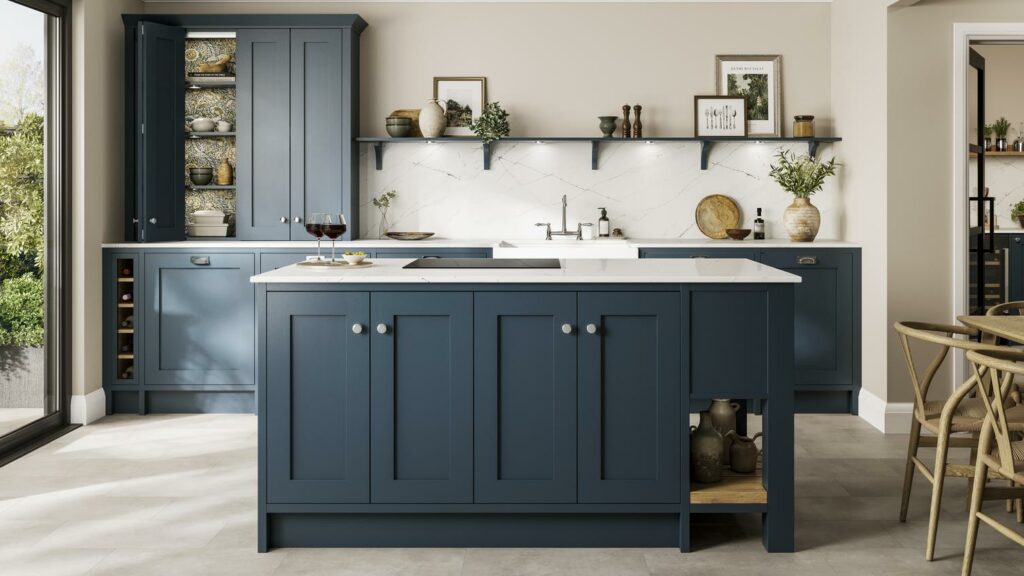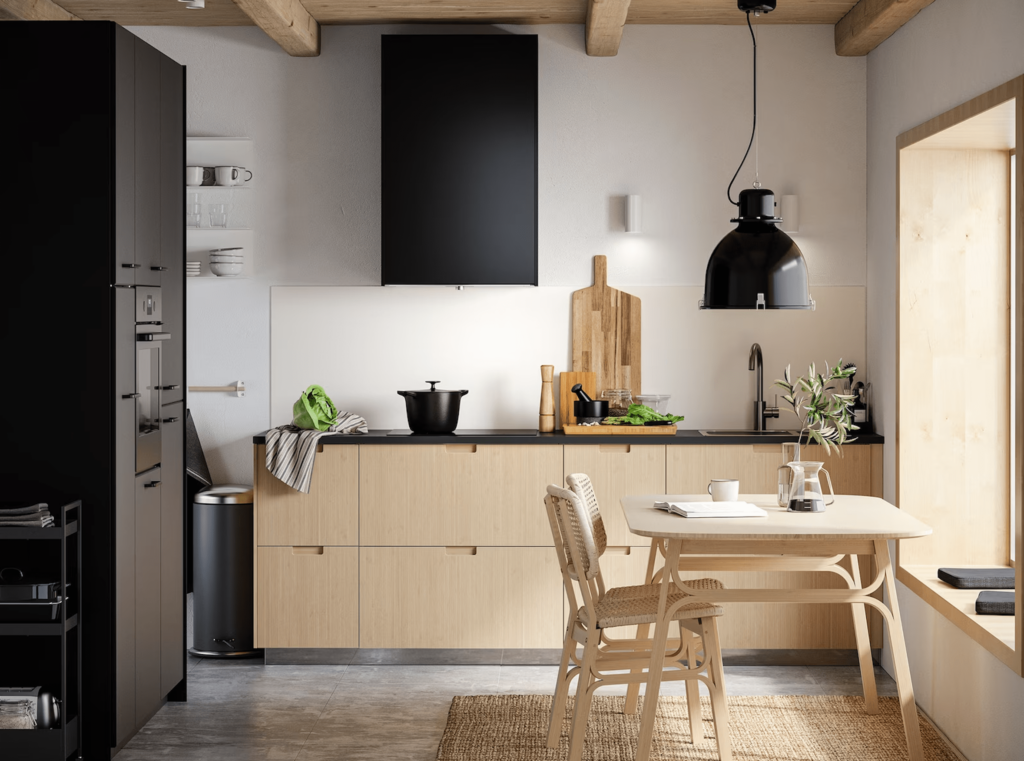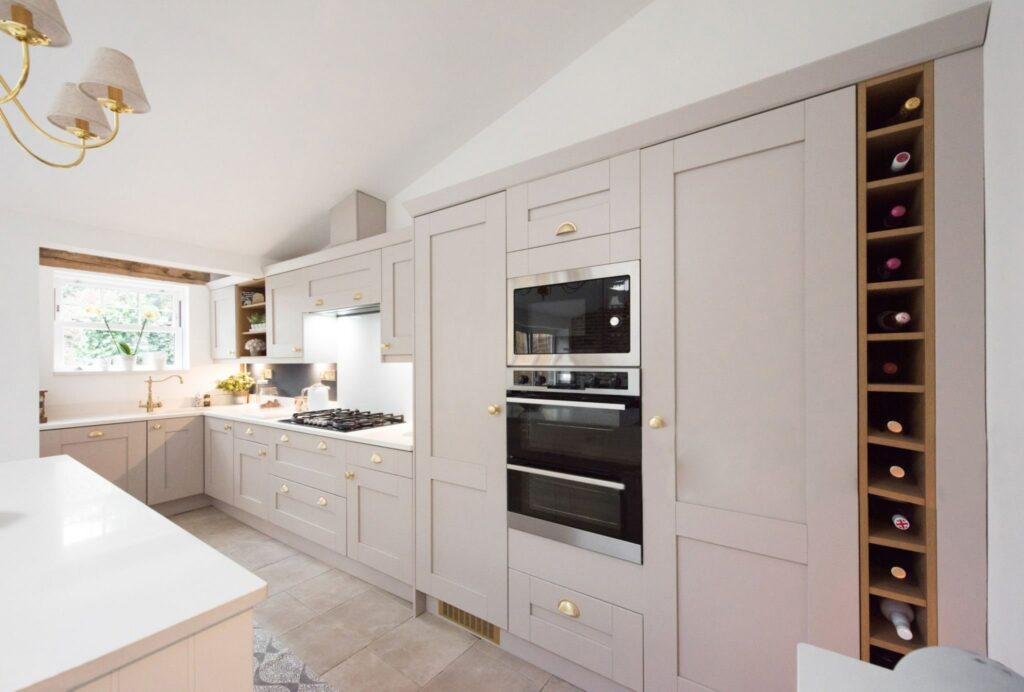

Planning a kitchen makeover but weighing up your options? Whether you are looking for a brand new fitted kitchen, second hand kitchen units, or a quality supplier at trade prices, the UK market has more options than most homeowners realise. The right choice depends on your budget, how hands-on you want to be, and whether you are working with a tradesperson or managing the project yourself.
As interior designers who work on kitchen projects regularly, we have put together an honest comparison of the best kitchen suppliers in the UK — new and secondhand — covering what each one does well, where they fall short, typical pricing, and which type of buyer each supplier suits best.
UK Kitchen Supplier Comparison at a Glance
Before going into detail on each supplier, here is a quick overview to help you narrow down your options.
Howdens Joinery
Price range: £4,000 to £8,000 (typical mid-range kitchen)
Best for: homeowners working with a builder or tradesperson
Design service: free in-depot planning
Installation: through your tradesperson only
IKEA
Price range: £2,000 to £5,000 (typical mid-range kitchen)
Best for: confident DIYers and budget-conscious buyers
Design service: free online and in-store planning
Installation: self-assembly or IKEA-approved installers
B&Q
Price range: £3,000 to £6,000 (typical mid-range kitchen)
Best for: homeowners who want high street accessibility and regular sales
Design service: free in-store consultations
Installation: B&Q approved fitters or your own tradesperson
Magnet
Price range: £5,000 to £10,000 (typical mid-range kitchen)
Best for: homeowners who want a managed service from design to install
Design service: free home or showroom consultations
Installation: Magnet’s own fitting service available
Wickes
Price range: £3,500 to £7,000 (typical mid-range kitchen)
Best for: homeowners who want a balance of quality and value with design support
Design service: free design consultations
Installation: Wickes approved installers or self-fit
Wren Kitchens
Price range: £5,000 to £12,000 (typical mid-range kitchen)
Best for: homeowners who want a premium finish at a mid-market price
Design service: free home or showroom consultations
Installation: Wren’s own fitting teams
DIY Kitchens
Price range: £2,500 to £6,000 (typical mid-range kitchen)
Best for: confident buyers who know what they want and can arrange their own fitting
Design service: online planning tools
Installation: supply only, you arrange your own fitter
Second Hand Kitchens
Price range: £200 to £2,000 (depending on brand, age and condition)
Best for: buyers on a tight budget, eco-conscious homeowners, or those doing a phased renovation
Sources: eBay, Gumtree, Facebook Marketplace, Used Kitchen Exchange, Preloved
Installation: you arrange your own fitter
1. Howdens Joinery
Howdens is the UK’s largest fitted kitchen supplier with over 800 depots nationwide. Their business model is trade-focused, which means you need to work with a builder, kitchen fitter or design professional like House Designer to access their products and pricing. This might sound like a barrier, but it actually works in your favour. Trade pricing is typically 30 to 40% lower than retail, and your tradesperson handles the ordering and logistics.
The range covers everything from simple, affordable units to more premium solid wood kitchens. The quality is consistent and reliable. Howdens also hold stock locally, which means shorter lead times and fewer delays during your project. If something arrives damaged, your fitter can swap it the same day from the local depot.
What they do well: Trade pricing keeps costs down. Stock availability means fewer delays. Wide range of doors, worktops and accessories. Consistent build quality across the range.
Where they fall short: You cannot buy directly as a homeowner. Showrooms are trade depots rather than aspirational displays, so it can be harder to visualise the finished result. Worktop options are more limited than some competitors.
Designer tip: Howdens kitchens respond very well to upgraded handles, worktops and lighting. The carcasses are solid and well made, so spending your budget on better surfaces and finishing details gives you a kitchen that looks significantly more expensive than it is. If you are unsure about layout, our interior design packages include kitchen planning with 3D visuals so you can see the finished result before ordering.
2. IKEA
IKEA remains the go-to for homeowners on a tight budget. Their METOD kitchen system is modular, which means you can mix and match carcass sizes, door fronts and internal fittings to create a layout that works for your space. The online planning tool is one of the best available, and you can walk into any IKEA store to see the kitchens in room-set displays.
The self-assembly model keeps costs low, but it is worth being realistic about the time involved. A full kitchen installation from flat-pack takes significantly longer than pre-assembled units, and the quality of the finished result depends heavily on the skill of the person fitting it. IKEA offers an approved installer service, but this adds considerably to the overall cost.
What they do well: Lowest entry price point. Excellent modular system with clever internal storage solutions. Good range of contemporary door styles. Easy to plan online before visiting a store.
Where they fall short: Self-assembly is time-consuming and not suited to everyone. Some door finishes feel thin compared to trade suppliers. Delivery can be unreliable during busy periods. Limited bespoke sizing for awkward spaces.
Designer tip: IKEA carcasses are genuinely good quality for the price. Where IKEA kitchens often let themselves down is in the doors and worktops. Consider buying IKEA carcasses and then sourcing doors from a third-party supplier like Plykea, Husk or Superfront for a significantly more premium finish. This hybrid approach gives you the best of both worlds.
3. B&Q
B&Q is one of the largest home improvement retailers in the UK and their kitchen range has improved significantly in recent years. They offer everything from basic flat-pack units to their GoodHome range, which includes more premium finishes and soft-close mechanisms as standard. Their biggest advantage is accessibility. There is a B&Q within reach of almost every homeowner in the country, and they run frequent sales and promotional offers that can reduce costs by 20 to 40%.
Their free in-store design consultation service is helpful for homeowners who are not sure about the best layout or style for their space. The quality sits in the mid-range: not as robust as Howdens at the lower end, but perfectly adequate for a kitchen that will serve you well for ten years or more.
What they do well: High street accessibility. Regular sales and promotional pricing. Free design consultations. Wide range from budget to mid-range. Easy to browse and compare in store.
Where they fall short: Build quality at the entry level is noticeably lower than trade suppliers. In-store design consultations vary in quality depending on the store. Delivery logistics can be disjointed when ordering multiple items.
Designer tip: Time your purchase around B&Q’s major sale events (typically January, Easter, Black Friday and bank holidays) when kitchen ranges are heavily discounted. The GoodHome range in particular offers solid value during these promotions.
4. Magnet
Magnet sits slightly above the budget end of the market, positioning itself as an affordable premium option. Their kitchens tend to feel more substantial than IKEA or B&Q’s entry-level ranges, and the showroom experience is more polished. They offer a full-circle service covering design, supply and installation, which appeals to homeowners who want a managed process from start to finish.
The door styles lean towards classic and transitional designs. If you are after a shaker kitchen or something with a more traditional feel, Magnet’s range is particularly strong. Their painted finishes are well executed and the colour palette is current without being gimmicky.
What they do well: Higher perceived quality than budget retailers. Strong shaker and classic door ranges. Full design-to-install service available. Good showroom experience.
Where they fall short: Pricing is higher than Howdens, IKEA or B&Q for comparable specifications. The full-service model adds cost. Contemporary and handleless options are more limited than some competitors.
Designer tip: Magnet kitchens pair well with upgraded worktops in quartz or natural stone. The door quality is good enough that you do not need to replace them, so put your upgrade budget into surfaces, splashbacks and lighting instead.
5. Wickes
Wickes offers a solid middle ground between the budget retailers and the more premium suppliers. Their kitchen range covers modern, traditional and shaker styles with a focus on practical functionality. Like B&Q, they provide a free design consultancy service and have stores across the UK.
Their ready-to-assemble units are straightforward to work with, making them a good option for homeowners who want to manage the project themselves with a competent fitter. Wickes also runs regular promotional offers, so it pays to time your purchase strategically.
What they do well: Good balance of quality and price. Clean, contemporary design options. Free design consultancy. Regular promotional pricing. Stores nationwide.
Where they fall short: Quality sits between B&Q and Magnet without being clearly better than either. Some ranges feel slightly generic. Installation service reviews are mixed.
Designer tip: Wickes handleless ranges offer surprisingly good value for a contemporary kitchen look. The J-pull and true handleless options give a sleek finish that competes visually with kitchens costing significantly more.
6. Wren Kitchens
Wren has grown rapidly to become one of the UK’s largest kitchen retailers. Their showrooms are impressive, featuring full-size room sets that make it easy to visualise how a kitchen will look and feel. They manufacture in the UK, which gives them more control over quality and lead times.
Wren’s pricing sits in the mid-range but their kitchens often look and feel more premium than the price suggests. The soft-close mechanisms, solid carcass construction and range of door styles are all strong. They also offer a fitting service with their own teams, which gives more accountability than third-party installers.
What they do well: Excellent showroom experience. UK manufactured. Strong build quality for the price. Good range of contemporary and classic styles. Own fitting teams.
Where they fall short: Promotional pricing can be confusing, with large discounts applied to inflated RRPs. Some customers report high-pressure sales tactics in showrooms. Lead times can extend during busy periods.
Designer tip: Ignore the promotional pricing and focus on what you are actually paying. Wren kitchens offer genuine value at the price point you end up paying, even if the was/now pricing feels misleading. Their Infinity Plus range is particularly good for a handleless, contemporary look.
7. DIY Kitchens
DIY Kitchens is an online-only, supply-only kitchen company based in Yorkshire. They offer a straightforward proposition: high-quality kitchen units at trade prices, delivered to your door, with no design or installation service. This makes them ideal for homeowners who already have a clear plan and a trusted fitter lined up.
The quality is genuinely impressive for the price. Carcasses are pre-assembled (not flat-pack), which saves significant time on site. Door quality across their ranges consistently outperforms high street equivalents at similar prices. The catch is that you need to be organised. There is no hand-holding: you measure, you plan, you order, you arrange fitting.
What they do well: Excellent quality-to-price ratio. Pre-assembled carcasses save time. Online ordering is straightforward. No showroom overheads means lower prices.
Where they fall short: No design service beyond online tools. Supply only, so you need your own fitter. No physical showroom to visit (though they have a display in Pontefract). Returns can be complicated for bulky items.
Designer tip: DIY Kitchens is the supplier we most often recommend to clients who want premium-looking doors and finishes without paying premium-supplier prices. If you use our interior design service for the layout and 3D visuals, then order from DIY Kitchens for the units, you get professional design with trade-level pricing on the products.
8. Second Hand Kitchens: Where to Find Used Kitchen Units in the UK

image credit: Material World
Second hand kitchens are one of the most underused options in the UK market. A quality kitchen from a reputable supplier can last 20 to 30 years with proper care, which means there are genuinely good used units available at a fraction of the original cost. This route suits buyers on a tighter budget, those renovating a rental property, or homeowners who want to reduce waste and buy more sustainably.
Where to find second hand kitchen units:
Used Kitchen Exchange (usedkitchen.co.uk) is the UK’s largest dedicated marketplace for pre-owned kitchens. Listings include full kitchens from brands like Howdens, Magnet, Wren and bespoke joinery companies. Most listings include dimensions, photos and collection details. This is the most reliable source for quality used kitchens at significant discounts.
eBay has a large volume of listings, ranging from individual unit doors to complete kitchen sets. Quality varies considerably, so check seller ratings carefully and ask for detailed photos of carcass interiors and hinge condition before committing.
Facebook Marketplace and Gumtree are worth checking regularly for local listings. Kitchens from house clearances, renovations and new builds often appear here at very low prices. The advantage is that you can inspect in person before buying. The disadvantage is that listings move quickly and availability is unpredictable.
Preloved and Freecycle occasionally list complete kitchens, particularly around the spring renovation season. Freecycle kitchens are sometimes free for collection, though condition varies.
What to check before buying a second hand kitchen: Measure your space before you look, not after. Confirm the carcass construction (solid back panels and sturdy sides matter far more than door style). Check that soft-close hinges still function. Ask whether worktops, sinks and appliances are included. Factor in the cost of new handles, hinges and a professional clean before installation.
Designer tip: A second hand kitchen in good structural condition with tired door fronts is worth buying. Replacing the doors is significantly cheaper than replacing the full kitchen, and the carcasses from trade suppliers like Howdens are built to last. Pair new doors from a supplier like Naked Doors or Replacement Kitchen Doors with solid used carcasses and you end up with a kitchen that looks completely fresh at a fraction of the cost.
How to Get the Best Value From Any Kitchen Supplier
Regardless of which supplier you choose, these principles will help you get the most from your budget.
- Get your layout right first. A well-planned layout makes a £4,000 kitchen feel like a £10,000 kitchen. A poorly planned layout makes a £10,000 kitchen feel frustrating. Invest time (or professional help) in getting the layout right before shopping for units. Our guide on open plan vs partitioned kitchens covers one of the biggest layout decisions you will face.
- Spend on surfaces, save on carcasses. Nobody sees the inside of your carcasses. Everyone sees your worktops, splashback and door fronts. A mid-range carcass with a premium worktop and good handles will look and feel better than a premium carcass with a budget worktop.
- Do not forget lighting. Kitchen lighting is often an afterthought but it has a significant impact on how the finished room looks and functions. Under-cabinet task lighting, a statement pendant over an island and dimmable downlights cost relatively little to add during a renovation but are expensive to retrofit later. Our lighting plan service covers exactly this.
- Time your purchase. Most kitchen suppliers run major promotions at predictable times: January, Easter, bank holidays and Black Friday. If your timeline is flexible, waiting for a sale can save 20 to 40% on the same kitchen.
- Factor in the full cost. The price of the kitchen units is only part of the total budget. Worktops, appliances, tiling, plumbing, electrics, flooring and installation all add up. A realistic total budget for a mid-range UK kitchen renovation is £8,000 to £15,000, with the units themselves accounting for roughly 30 to 40% of that figure. For a fuller picture, see our guide on how much an interior designer costs in the UK.
- Consider finance carefully. Many kitchen suppliers offer consumer finance options, allowing you to spread the cost over time. Review the terms and interest rates carefully before committing. Interest-free options are worth waiting for if they align with your timeline.
Get Professional Help With Your Kitchen Design
Choosing the right supplier is only half the equation. The layout, the lighting, the colour scheme, the worktop material and the way your kitchen connects to the rest of your home all need to work together. Getting these decisions right is what turns an affordable kitchen into one that feels genuinely special.
Our interior design packages include kitchen planning with 3D visuals so you can see exactly how your new kitchen will look before you order a single unit. We work with any supplier, helping you get the best value regardless of where you buy. Not sure where to start? Book a free consultation with our design team.
About the author
Founder & Interior Designer
A formally trained interior designer with over 16 years of industry experience, Samantha-Jane founded House Designer in January 2020 after recognising that most homeowners wanted professional design guidance but found the traditional model too expensive, too slow, or simply out of reach. The studio she built is the first of its kind to cover interiors, gardens and exteriors under one roof.