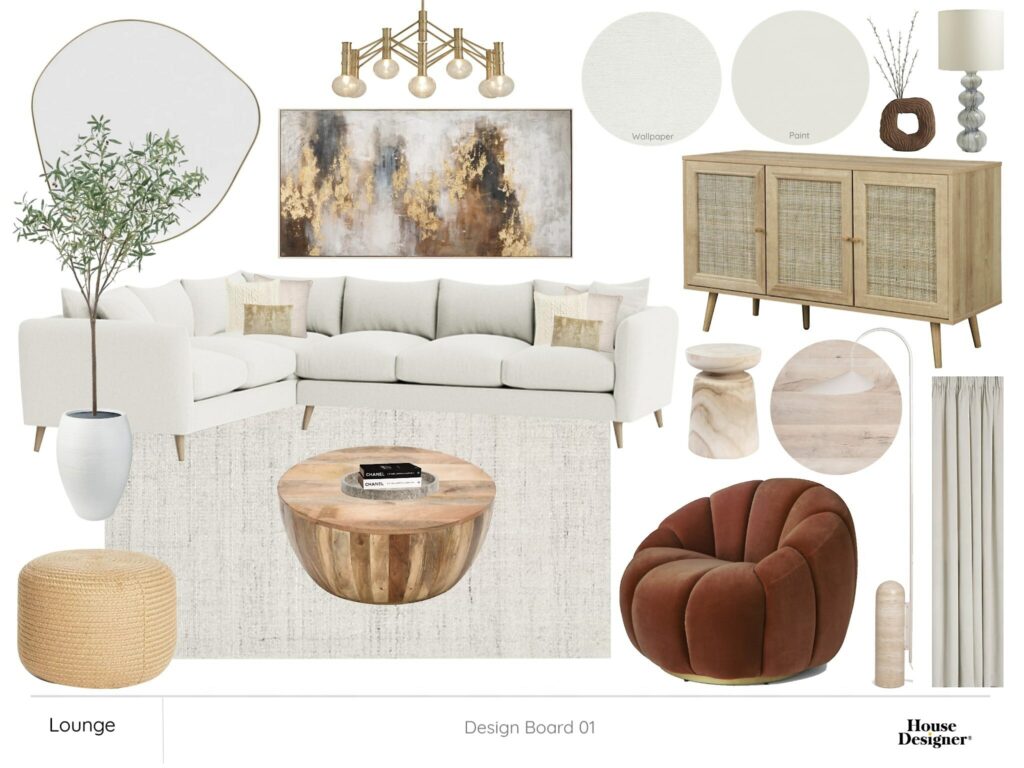

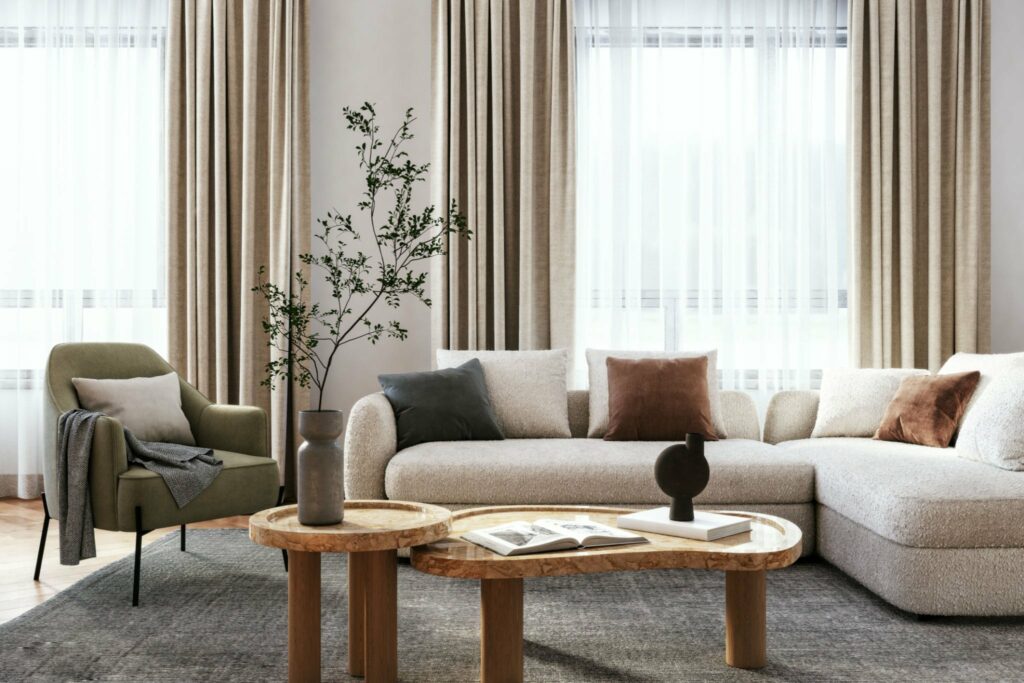
A cosy living space in London featuring a cream corner sofa with brown and grey cushions, green accent chair, wood coffee table, and tall curtains.

Interior Design for Improved Mental Health and Well-Being

The way a room is designed has a direct effect on how you feel in it. This is not a new idea — architects and designers have understood it for centuries — but it has become more relevant as people spend more time at home and have higher expectations of what that time should feel like. A space that is cluttered, poorly lit or visually restless is harder to relax in. A space that is calm, organised and well considered makes daily life feel easier in ways that are difficult to articulate but immediately obvious.

This guide covers the specific design decisions that have the most meaningful impact on wellbeing, drawn from our experience designing homes for clients across the UK.

Colour Palette

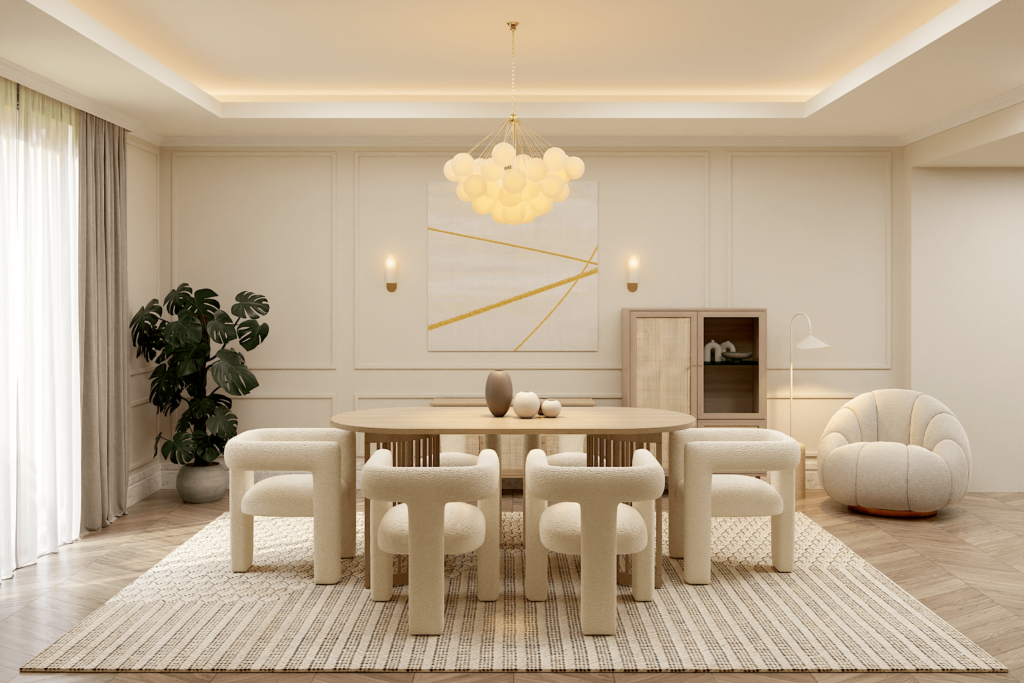
Minimalist dining room design with neutral tones, modern chandelier and sculptural chairs showing a calming interior colour palette

Image credit: House Designer

Colour affects mood more directly than almost any other design element. Pale, less saturated tones — soft whites, warm neutrals, dusty greens and muted blues — create a calm backdrop that does not compete for attention. These are the colours that allow a room to feel restful rather than stimulating, which is what most living spaces need to be for most of the day.

Heavily saturated colours are not wrong, but they are more demanding. A deep red or a bright emerald adds energy and presence to a room, which works well in spaces where activity and engagement are the purpose — a dining room, a home office, a kitchen. In a bedroom or a sitting room where the primary purpose is rest and recovery, that level of visual intensity tends to work against the room rather than for it.

The relationship between colour and natural light matters too. The same colour looks very different in a north-facing room than in a south-facing one, and a colour that reads as calm and warm in daylight can feel flat and slightly cold in the evening. Our guide to Farrow and Ball greens and neutrals covers how to choose colours that perform across different light conditions and different times of day.

Natural Elements and Plants

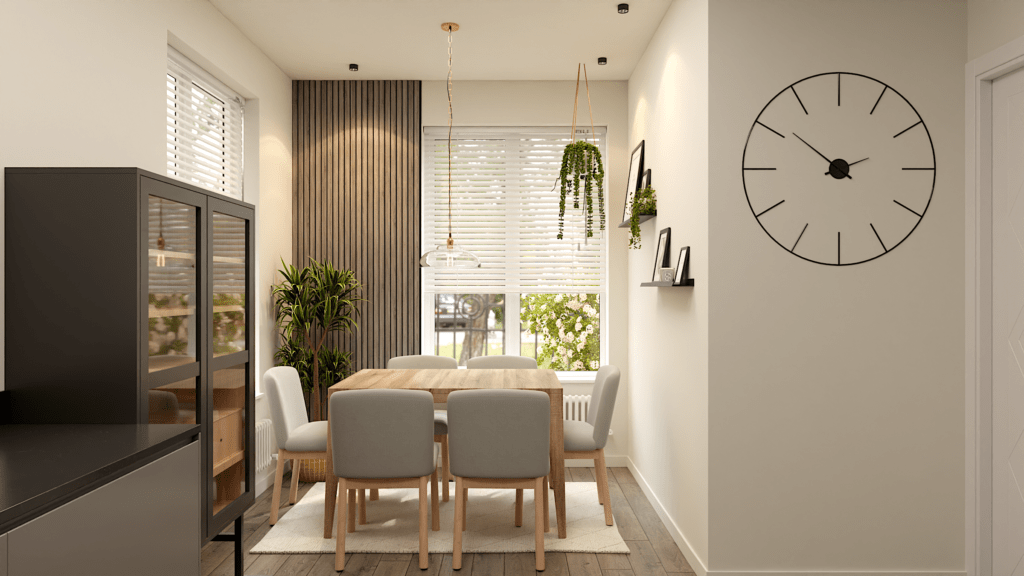
Bright dining space with wooden table, grey chairs and hanging plants in a House Designer interior project

Image credit: House Designer

There is a well-documented human response to natural elements in an interior. Plants, natural materials and access to natural light all contribute to a sense of calm and ease that is difficult to replicate through purely artificial means. Houseplants are the most accessible way to bring this quality into a room. They introduce living texture, soften hard surfaces and genuinely improve air quality, which has a measurable effect on how a space feels to spend time in.

The materials in a room matter in the same way. Wood, stone, linen, wool and clay all have a warmth and tactile quality that manufactured materials do not replicate. A room furnished primarily with natural materials tends to feel more grounded and more comfortable than one dominated by synthetic alternatives, even when the two rooms are otherwise similar in layout and scale. This principle sits at the heart of the quiet luxury interior design approach that informs a significant proportion of the residential work we do.

Decluttering and Storage

Spacious open plan interior with white sofas and clean lines showing decluttered and organised living space

Image credit: House Designer

A cluttered room is harder to relax in. This is not a design opinion but a psychological reality. Visual noise competes for attention and the cognitive effort of filtering it out, even unconsciously, is tiring. A room that is organised and clear allows the mind to settle in a way that a cluttered one does not.

The practical solution is not minimalism for its own sake but adequate storage that keeps everyday items out of sight when they are not in use. Built-in joinery, well-planned cabinetry and furniture with integrated storage all contribute to a room that can be lived in without becoming visually chaotic. Our bespoke joinery service is one of the most effective routes to this, because fitted storage designed for a specific room uses the available space far more efficiently than off-the-shelf alternatives.

A useful starting point for decluttering is to go through your possessions and remove anything you have not used in over a year. What remains should have either a practical purpose or a genuine emotional value. Everything else is visual noise.

Balance and Cohesion

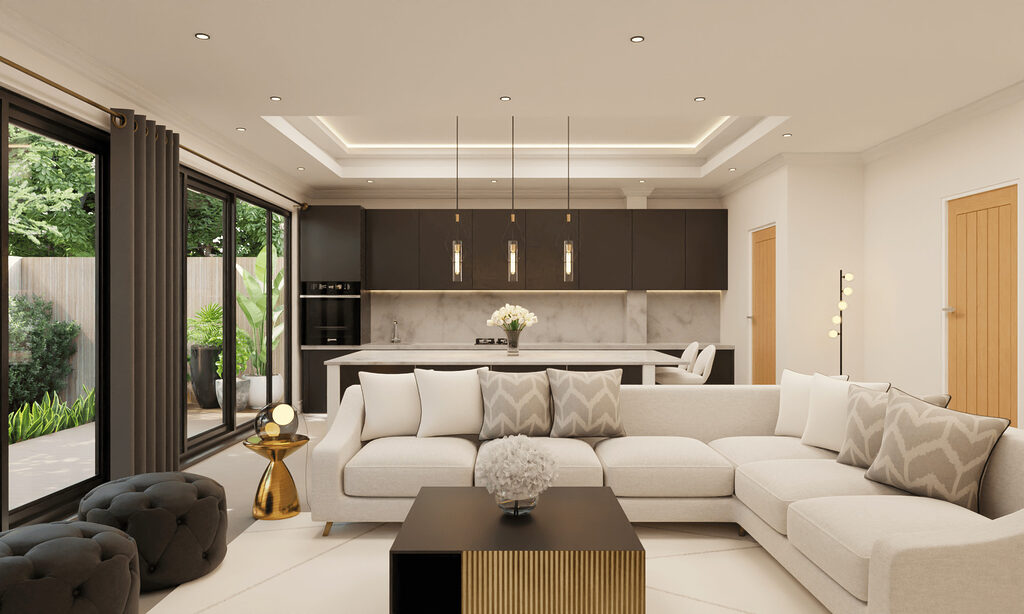
Elegant interior with cream sectional sofa, marble island and large glass doors in a cohesive House Designer scheme

Image credit: House Designer

A room where the furniture, materials and colours all belong to the same visual family feels settled and complete. A room where these elements have been assembled without a clear relationship between them feels restless, even if each individual piece is attractive in isolation. This is what designers mean when they talk about cohesion — not that everything matches, but that everything belongs.

Achieving this does not require everything to be bought at the same time or from the same source. It requires a clear sense of the palette, the material family and the overall character of the space before individual pieces are specified. Getting this framework right at the start of a project is one of the most valuable things a design process provides. If you are not sure what that framework looks like for your home, our style quiz is a useful starting point.

Window Treatments and Sleep Quality

Cosy bedroom with beige bedding, patterned cushions and a simple roller blind showing window treatment for sleep quality

Image credit: House Designer

Sleep quality is one of the most direct connections between the design of a bedroom and physical and mental wellbeing. The average adult needs between seven and eight hours of sleep to function well, and a significant proportion of people consistently fall short of that.

Window treatments play a larger role in this than most people realise. Light exposure at the wrong time disrupts sleep patterns. Curtains or blinds that do not provide adequate light control in the early morning are one of the most common and most easily fixed causes of poor sleep quality. Lined curtains in a heavier fabric or blackout roller blinds behind a decorative curtain give you full control over the light entering the room at any time of day.

For a more detailed look at how bedroom design affects sleep, our guide to designing a bedroom for better sleep covers the full range of decisions from layout and lighting to materials and temperature.

Bedding and Bedroom Comfort

The materials you sleep in and on have a direct effect on sleep quality and therefore on how you feel the following day. Natural fibres, particularly organic cotton, are breathable, temperature-regulating and hypoallergenic, making them a better choice for most people than synthetic alternatives. Cotton bedding absorbs moisture without retaining heat, which keeps you comfortable across a range of temperatures rather than requiring you to adjust during the night.

For those interested in taking bedroom wellness further, grounding or earthing is a growing area of interest in health-focused interior design. The principle involves reconnecting the body to the earth’s natural electrical charge, which some research suggests can support improved sleep quality and reduced inflammation. One way to achieve this indoors is through the use of grounding sheets made with conductive materials that connect to a standard grounding outlet, bringing the potential benefits of barefoot contact with the earth into the bedroom environment.

Lighting for Wellbeing

Lighting is one of the most significant environmental factors affecting mood and energy levels throughout the day. Natural light supports the body’s circadian rhythm — the internal clock that regulates sleep and wakefulness — and a room with good access to daylight feels more energising and easier to be in during waking hours.

Artificial lighting needs to support rather than disrupt this pattern. Bright, cool light during the day keeps you alert. Warmer, dimmer light in the evening signals to the body that it is time to wind down. A room where the overhead lighting cannot be dimmed and where there is no lower, warmer alternative is a room that works against your natural sleep cycle in the evenings.

For renovation projects where lighting needs to be properly planned from the start, our lighting design plan service covers the full scheme across every room, specifying the right colour temperatures, dimmer configurations and layered sources to support both function and wellbeing throughout the day.

Want to create a home that feels as good as it looks?

Our interior design team works with clients across the UK on homes that balance beauty with genuine comfort and wellbeing. Book a free consultation to talk through your project, or take our style quiz if you are still working out the direction that suits you.

About the author

House Designer Team, Award-Winning Interior, Garden and Exterior Design Studio

House Designer Team

Interior, Garden & Exterior Design Studio

House Designer is an award-winning studio bringing together a team of qualified interior designers, garden designers, exterior designers and horticulturists. Each with relevant qualifications and years of industry experience

2048 1365 House Designer team