

Creating the perfect home office is about striking the right balance between functionality and comfort, ensuring you stay productive and at ease throughout your workday. As one of the UK’s leading interior design companies, we know that having a well-designed home office is crucial to boosting productivity and creativity. With more and more people working from home these days, creating the perfect home office is becoming increasingly important.
In this post, we share some interior design tips that will help you create a workspace that is both functional and stylish, so you can maximise your productivity and enjoy your workday.
Choose the right space
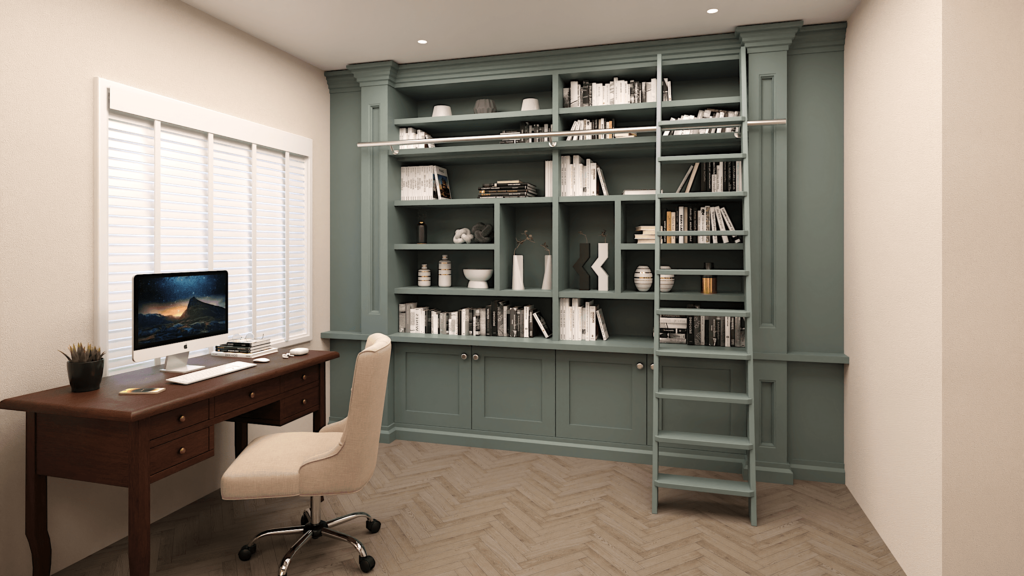
Image credit: House Designer
When it comes to creating the perfect home office, the first step is to choose the right space. Ideally, your home office should be in a quiet area with little to no distractions. You should also make sure that your space has plenty of natural light and good ventilation. If possible, try to choose a room that is away from the main living areas of your home to minimise interruptions.
Invest in an Ergonomic chair

Investing in an ergonomic chair is essential for any home office. Sitting for long periods can be tiring and uncomfortable, so it’s important to choose a chair that provides good support for your back and arms. An ergonomic chair will not only make your workday more enjoyable but will also prevent aches and pains.
Optimise Storage Solutions

Home office moodboard by House Designer
A cluttered workspace can be distracting and can reduce productivity. Optimise storage solutions to keep your workspace organised and tidy. Bookcases, cabinets, and shelves are great options for storing books, files, and other supplies. Keep items you use regularly within easy reach and consider investing in some attractive storage containers to keep things neat and tidy.
Add Some Greenery

Adding plants to your workspace is not only aesthetically pleasing but can also improve your mood and productivity. Plants can help to purify the air, reduce stress levels, and increase your overall sense of well-being. Consider adding a small plant or two to your workspace to brighten up the room and improve your workday.
Personalise Your Space

Home office moodboard by House Designer
Personalising your workspace can help you feel more motivated and productive. Add some personal touches such as artwork, family photos, or decorative items that reflect your personality and style. These personal touches will make your workspace feel more inviting and less like a generic office.
Invest in Good Lighting

Image credit: Office Designer
Good lighting is crucial to creating the perfect home office. Natural light is the best option, so try to set up your workspace near a window if possible. However, if natural light is limited, invest in good quality task lighting to avoid eye strain and headaches. A well-lit workspace will not only improve productivity but will also create a welcoming and comfortable atmosphere.
Our Design Top 10 Tips
Creating the perfect home office is all about finding a balance between function and style. By choosing the right space, investing in a comfortable chair, optimising storage solutions, adding some greenery, personalising your space, and investing in good lighting, you can create a workspace that is both functional and stylish.
1. Choose the Right Location
Select a space with minimal distractions and plenty of natural light. Consider the flow of traffic in your home and your ability to work undisturbed in the chosen area.
2. Invest in a Good Chair and Desk
Your chair and desk are the most crucial pieces of furniture in your home office. Opt for an ergonomically designed chair that supports your back and a desk at a comfortable height to prevent strain.
3. Prioritise Natural Light
Position your desk near windows to take advantage of natural light, which can boost mood and productivity. Use sheer curtains or blinds to control glare without darkening the room.
4. Incorporate Task Lighting
In addition to natural light, ensure you have adequate task lighting, such as a desk lamp, to reduce eye strain during evening work sessions.
5. Keep the Colour Scheme Inspiring
Choose colours that motivate you. Soft, neutral tones can create a calming environment, while brighter colours might energise and stimulate creativity.
6. Organise Efficiently
Use shelves, filing cabinets, and desk organisers to keep your workspace clutter-free. A tidy office can help maintain focus and efficiency.
7. Personalise Your Space
Add personal touches like family photos, artwork, or plants. These elements make your office more welcoming and enjoyable to work in.
8. Consider Acoustics
If your home office is in a noisy area, think about soundproofing options or use a white noise machine to help drown out distractions.
9. Ensure Proper Ventilation
Good air quality can significantly impact your concentration and energy levels. Keep the air fresh with proper ventilation or an air purifier.
10. Invest in Technology and Connectivity
Make sure you have a reliable internet connection and all the necessary gadgets and software to work efficiently. Organise cords and chargers to keep your desk area tidy.
Expert Design Tips for Productivity
Establish clear boundaries for your office space, especially if it’s part of an open-plan living area. Room dividers or bookcases can help define your workspace.
By implementing these design tips, you can create a home office that not only fosters productivity but also keeps you comfortable throughout your workday. Remember, the best home office is one that reflects your personal style and meets your professional needs, allowing you to work at your best.
At House Designer, we understand the importance of creating a workspace that promotes productivity and creativity, and we’re here to help.
Contact us today to discuss how we can help you create the perfect home office that fits your needs and style.