
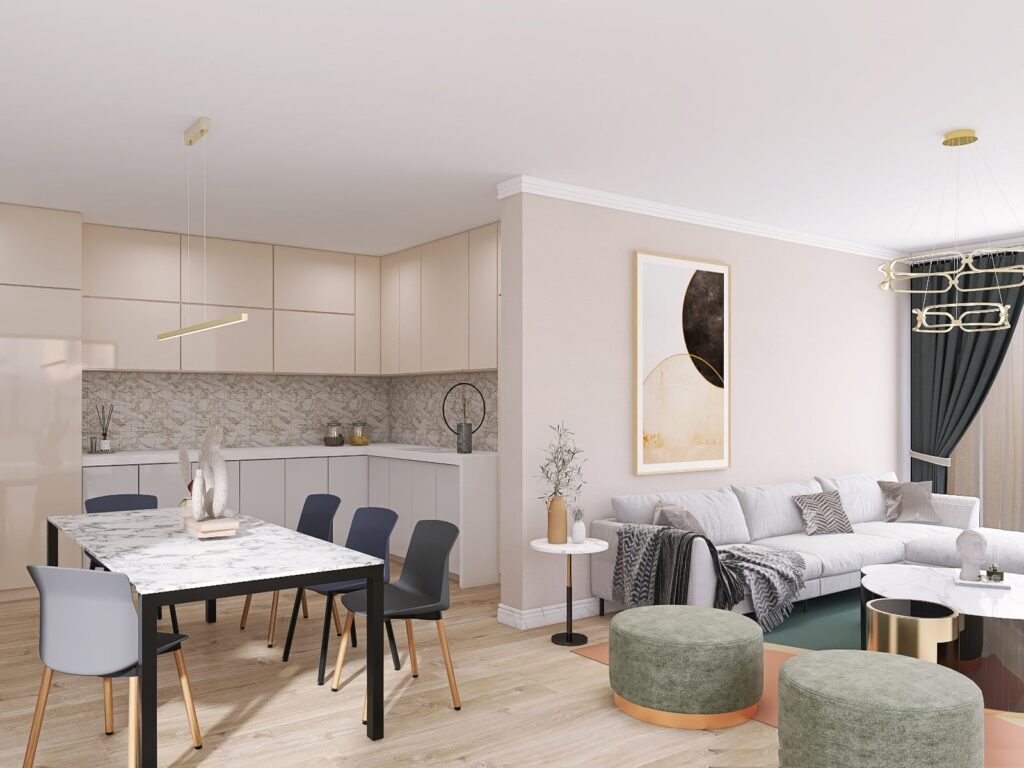
Scandi-style living room with a neutral sofa, earthy cushions, light wood flooring, modern artwork, and a woven pendant light for a cosy, minimalist look.

E-Design vs Traditional Interior Design: Which Is Right for Your Home?

E-Design, also known as virtual interior design, has changed how homeowners in the UK access professional design expertise. Where once hiring an interior designer meant committing to a lengthy, hands-on process with regular site visits and in-person consultations, E-Design offers a remote alternative that delivers professional results without the same level of time commitment or logistical complexity.

Both approaches have genuine strengths and both have limitations. Understanding the difference helps you choose the right model for your project rather than simply defaulting to whichever you encounter first.

How Traditional Interior Design Works

Interior designer styling a modern grey sofa with cushions in a cosy living room

Traditional full-service interior design is a hands-on, end-to-end process. A designer visits your home, takes measurements, assesses the space in person, and develops a concept through a series of face-to-face consultations. They manage relationships with contractors and suppliers, oversee installation, and are physically present at key stages of the project from initial brief through to final styling.

This level of involvement is genuinely valuable for certain types of projects. If your home requires structural changes, complex bespoke joinery, a full kitchen or bathroom design from scratch, or significant contractor management, having a designer who can be on site, respond to problems as they arise, and make decisions in real time is difficult to substitute.

The trade-off is time and availability. Traditional design projects are longer, require more of your own time for meetings and approvals, and are limited by geography. The designers available to you are those who can physically reach your property within a reasonable distance.

How E-Design Works

Interior designer reviewing plans and materials during a traditional full-service interior design project

E-Design, or virtual interior design, handles the entire design process remotely. You provide your room measurements, photographs of the existing space, and a design brief covering your style preferences, priorities, and how you use the room. Your designer works digitally from that information to develop a full design scheme.

The deliverables are typically comprehensive: a mood board and colour direction, a detailed furniture layout drawn to scale, photorealistic 3D renders showing exactly how the finished room will look, and a sourcing list with direct links to every item. You then implement the design yourself, purchasing the furniture and coordinating any trades you need independently.

At House Designer, our E-Design process is structured around clear stages with regular touchpoints, so the collaboration feels personal rather than transactional. Clients see their space in photorealistic 3D before anything is purchased, which removes the uncertainty that comes with making significant furniture decisions from a mood board alone. 3D visualisation in space planning allows you to understand exactly how furniture scale, room flow, and layout decisions will work in practice before committing to purchases.

Thinking about E-Design for your home?

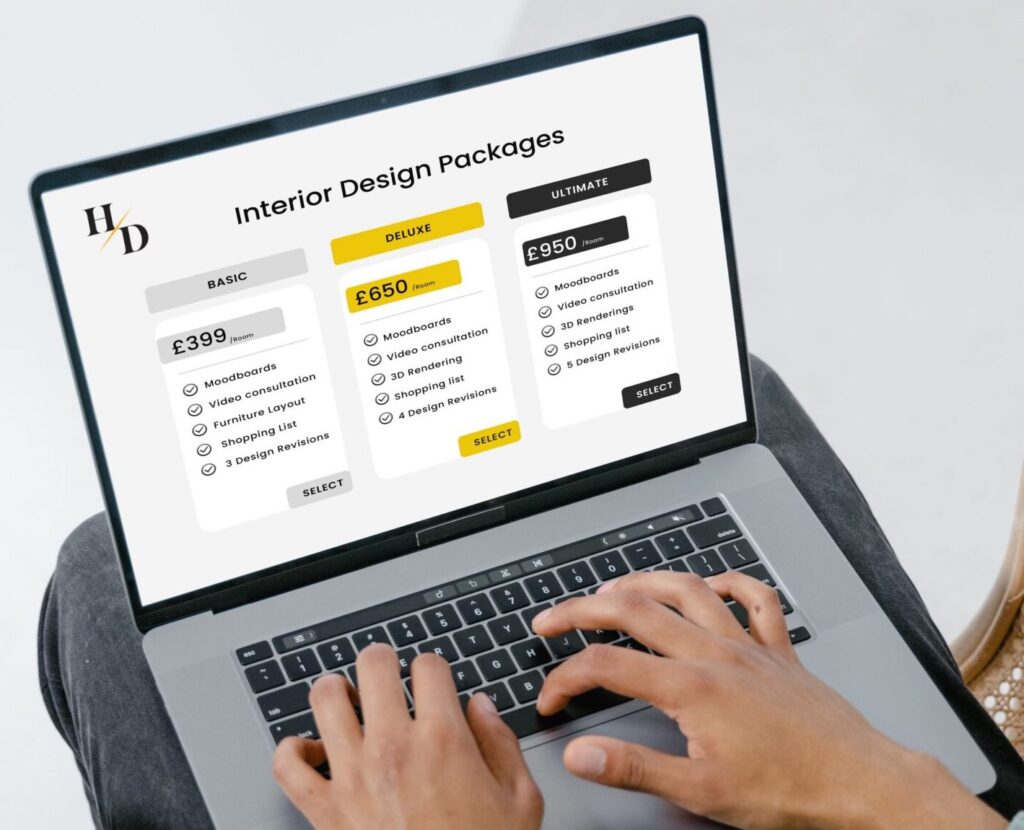
Our virtual interior design packages cover everything from initial concept and 3D visualisation through to a full sourcing list. Book a free consultation to talk through your project with our team.

View our packages

Project Timelines

Modern living room design concept created through E-Design virtual interior design process

Traditional design projects move at the pace of site visits, contractor schedules, and supplier lead times. A single room project can take two to four months from first consultation to completion. Whole-home projects involving construction or bespoke elements can take considerably longer, and timelines are often subject to delays outside the designer’s control.

E-Design is significantly faster. Because there are no site visits to schedule and no contractor coordination involved in the design phase, turnaround times are much shorter. At House Designer, our Classic Interior Package takes around three weeks from initial consultation to final design delivery. For homeowners working to a move-in date or wanting to see results quickly, this is a meaningful practical advantage.

Location and Accessibility

Traditional full-service design is geographically constrained. The designers available to you are those who can reach your property, which limits choice significantly for homeowners outside major cities. It also means that a designer’s travel time forms part of the project, which adds to the overall investment.

E-Design removes geography entirely. You can work with any designer regardless of where either of you is based, which opens up the full market of available talent rather than just those within reach. House Designer works with clients across the UK, from London apartments and period townhouses to new builds and rural family homes, as well as international clients purchasing UK property who need a home designed and styled entirely on their behalf before arrival.

What E-Design Cannot Replace

Free interior design consultation with House Designer to discuss E-Design or traditional design options

E-Design is best suited to furnishing and decorating projects: defining colour and material direction, planning furniture layouts, specifying lighting, and curating accessories for a room or series of rooms without major structural work involved. This covers the majority of what most homeowners actually need from a designer.

For projects that involve significant structural changes, complex bespoke joinery, or extensive contractor management, traditional full-service design brings genuine value that a remote process cannot replicate. A designer who can be physically present during a build, respond to unexpected problems on site, and manage contractor relationships in real time is doing work that goes well beyond the design itself. Extension projects, for instance, often require on-site decision-making that benefits from direct designer involvement.

Many homeowners use both approaches at different stages of a project. A full-service architect or designer for the structural and construction phase, then a virtual design service for the interior furnishing and styling once the space is ready. This hybrid approach keeps the investment proportionate to what each stage actually requires.

Cost Considerations

One of the most common questions homeowners ask is whether they can afford professional design help at all. Affordability concerns often stem from assumptions about what interior design costs, but E-Design packages are significantly more accessible than traditional full-service fees because they exclude site visits, contractor management, and the designer’s physical time on location.

Understanding what interior designers charge in the UK helps set realistic expectations. Traditional designers typically work on hourly rates or percentage-of-project fees that reflect the hands-on nature of their involvement. E-Design operates on fixed package pricing, which means you know the full cost upfront and can budget accordingly without surprises.

For those working within tighter budgets, E-Design offers professional-level design direction without the premium attached to full-service coordination. You handle the implementation yourself, which requires more of your own time but reduces costs considerably compared to a managed service.

Which Is Right for Your Project?

If your project is primarily about furnishing, decorating, and making a space feel cohesive and personal—without structural change—E-Design is likely the right choice. If your project involves building work, contractor management, or complex bespoke elements that require on-site decision-making, traditional full-service design is worth the additional commitment.

Room-specific projects like kitchen design, bathroom layouts, or living room furniture arrangements work particularly well through E-Design when the structural shell is already in place and the focus is on creating a functional, well-designed interior.

If you are unsure which applies to your situation, a free consultation with our team is a good starting point. We can talk through your project, confirm whether E-Design is the right fit, and give you a clear picture of what the process would involve before you commit to anything.

1536 1024 Alysia Panther