


Interior design trends shift constantly. One year everything is pared-back and neutral, the next it is all bold wallpapers and rich colour. But dopamine decor is something slightly different to a trend. It is more of a philosophy, and one with real staying power, because it starts from a simple, personal question: what makes you feel good when you walk into a room?
The answer is different for everyone, and that is exactly the point. Dopamine decor is not a look. It is a way of approaching your home that prioritises how the space makes you feel over how it compares to what is currently fashionable. Done well, it produces interiors that are joyful, specific and truly personal rather than spaces that could belong to anyone.
What is Dopamine Decor?

The term comes from the idea that certain environments trigger a positive emotional response, a feeling of energy, warmth or happiness with a physiological basis. Colour, texture, pattern and the objects we surround ourselves with all contribute. A room full of things you love, colours that lift your mood and materials that feel good to touch produces a different experience to one designed around restraint and neutrality.
This does not make dopamine decor the opposite of quiet luxury or minimal design. It simply prioritises a different value. Where quiet luxury asks how do I make this room feel calm and resolved, dopamine decor asks how do I make this room feel like me. Both are legitimate, and in practice many of the best interiors draw from both.
At House Designer, we work with clients across the UK who want homes that feel personal and joyful rather than simply correct. Colour, texture and personality all play a role in the interior design we do, and dopamine decor thinking sits comfortably within that.
Colour: The Most Direct Route to a Joyful Room

image credit: House Designer
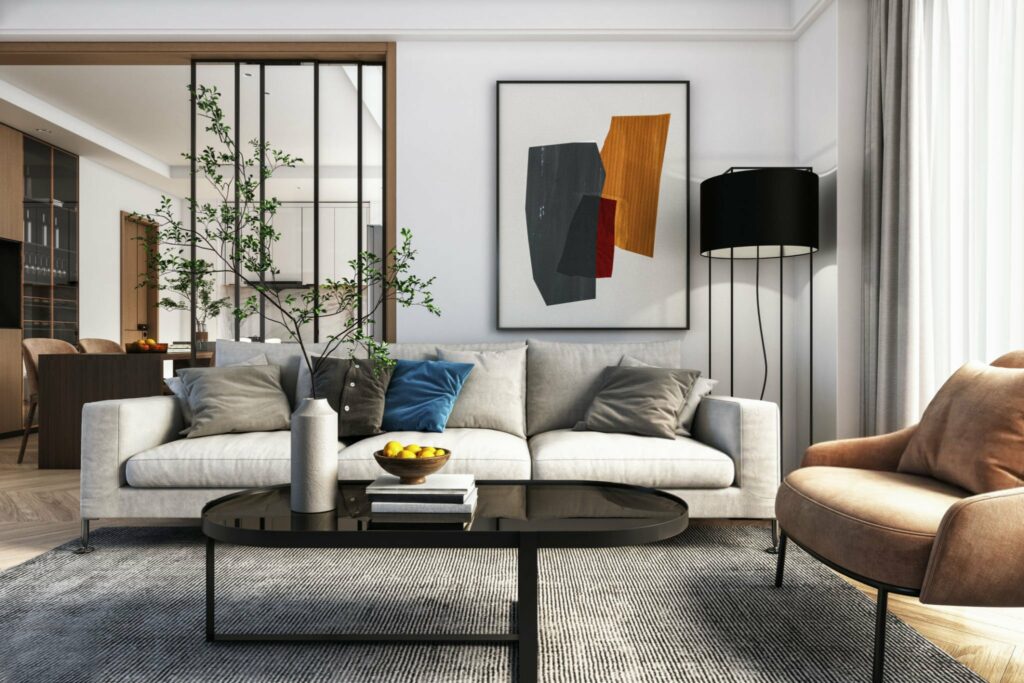
Colour is the most immediate tool in a dopamine decor scheme, and the one with the most direct effect on mood. You do not need to paint every wall in a saturated hue to get the benefit. A deep blue sofa in a neutral living room, bold dining chairs against softer walls, or a single richly coloured accent piece in an otherwise restrained scheme can all give you the lift you are looking for without overwhelming the space.
The approach that works best is to keep a neutral or relatively calm backdrop and introduce your colour through furniture, textiles and accessories. This gives you the flexibility to evolve the scheme over time without repainting, and it means the colour reads as deliberate rather than chaotic.
If you are not sure which colours suit you and your home, our style quiz is a useful starting point. It takes a few minutes and gives you a clear sense of the direction that feels most like you before you commit to any purchases.
Texture and Pattern

Texture has a powerful effect on how a room feels to be in. A room with a single surface texture, however attractive that texture is, reads as flat and a little one-dimensional. Layering materials, boucle upholstery alongside smooth velvet cushions, a textured rug on a smooth floor, rough linen curtains against painted walls, gives the room a depth and interest that makes it far more enjoyable to spend time in.
Pattern works on the same principle. A bold wallpaper on a single wall paired with smaller pattern accents in cushions or throws produces a scheme that feels layered and rich without becoming overwhelming. The trick is to let one pattern lead and keep everything else supporting rather than competing.
Sustainable and Personal Choices

One of the most sustainable approaches to interior design is buying things you actually love rather than things that happen to be fashionable at the moment of purchase. A piece you love will stay in your home for years. A piece you bought because it matched a trend will feel dated within a few seasons.
Dopamine decor supports this because it starts from personal preference rather than external reference. If your furniture choices are driven by what makes you happy rather than what is currently popular, they are far more likely to still feel right in five years. Reclaimed pieces, vintage finds and objects with a personal story all add a quality of permanence and authenticity that fast furniture cannot replicate.
Wallpaper and Feature Walls

A bold wallpaper is one of the fastest ways to change the character of a room. A single feature wall with a print or pattern you love introduces personality and visual energy in a way paint alone rarely matches. If you are nervous about committing, removable wallpapers are a good starting point, letting you test how a bold pattern feels to live with before making a permanent decision.
Feature wallpapers work best where the scale of the room lets the pattern read clearly. A large-scale botanical print in a narrow hallway risks feeling overwhelming. The same print in a generous dining room or a bedroom with good ceiling height earns its place properly.
Greenery and Plants

Houseplants are one of the most effective and accessible tools in a dopamine decor scheme. They add colour, living texture and a freshness that manufactured objects cannot replicate. They also improve air quality and have a documented positive effect on mood and stress, which makes them one of the few design choices that delivers both aesthetic and practical wellbeing benefits at once.
Trailing plants in a hallway, a statement fiddle-leaf fig in the living room, herbs on a kitchen windowsill. The scale and species matter less than the habit of keeping living things in the spaces where you spend most of your time. For more on how natural elements support wellbeing at home, our article on designing for wellbeing covers this in more depth.
Why This Approach Has Staying Power

Dopamine decor will outlast most of the trends around it, because it is not really a trend. It is a framework for making decisions that puts your own emotional response at the centre of the process. When your home reflects the things you love rather than the things that were popular when you decorated, it feels more personal, more settled and more enjoyable to come back to every day.
That is the kind of home we aim to help clients create. Joyful, personal and full of the things that matter to you, designed so everything sits together coherently rather than competing for attention. If you would like help getting there, book a free consultation with our team.
Want to bring more colour and joy into your home?
Our interior design team works with clients across the UK on rooms that feel personal and uplifting. Take our style quiz to find your direction, then book a free consultation to talk it through.
About the author

Interior Designer, House Designer
Jade Spain graduated with a First Class degree in Interior Design from De Montfort University. Her work draws on Scandinavian and modern influences, with a particular focus on how colour, texture and lighting change the feel of a space without overwhelming it.